Introduction
The order lands before the kitchen lights are properly on. A caterer has three functions this week, a hotel has a full house, and a quick-service operator has a promotion that cannot run out of stock by Thursday. In moments like these, a supplier is either the calm in the storm or the reason the whole plan wobbles. That single truth is what makes foodservice procurement South Africa less about price lists and more about whether a delivery actually shows up, correct, and on time, week after week.
For a small producer trying to break into kitchens, this is the part that catches people off guard. The food can be excellent, and the story can be lekker, yet the deal still falls through because lead times slipped or a case size did not suit the operation. Getting these basics right is what separates a supplier who gets reordered from one who gets quietly replaced. This guide walks through the levers that buyers in catering, hospitality, and quick service judge first.
Table of Contents:
TL;DR: Key Takeaways
- Foodservice buyers judge three things first: lead times that hold under pressure, case sizes that fit the kitchen, and consistency across every batch.
- Sharp MOQ management protects both the buyer’s storeroom and the supplier’s cash flow.
- Honest supply planning, with buffer stock and a continuity plan, beats optimistic promises every time.
- Vet foodservice suppliers South Africa operators trust with proof, not pitch decks.
Why foodservice procurement feels different in South Africa right now
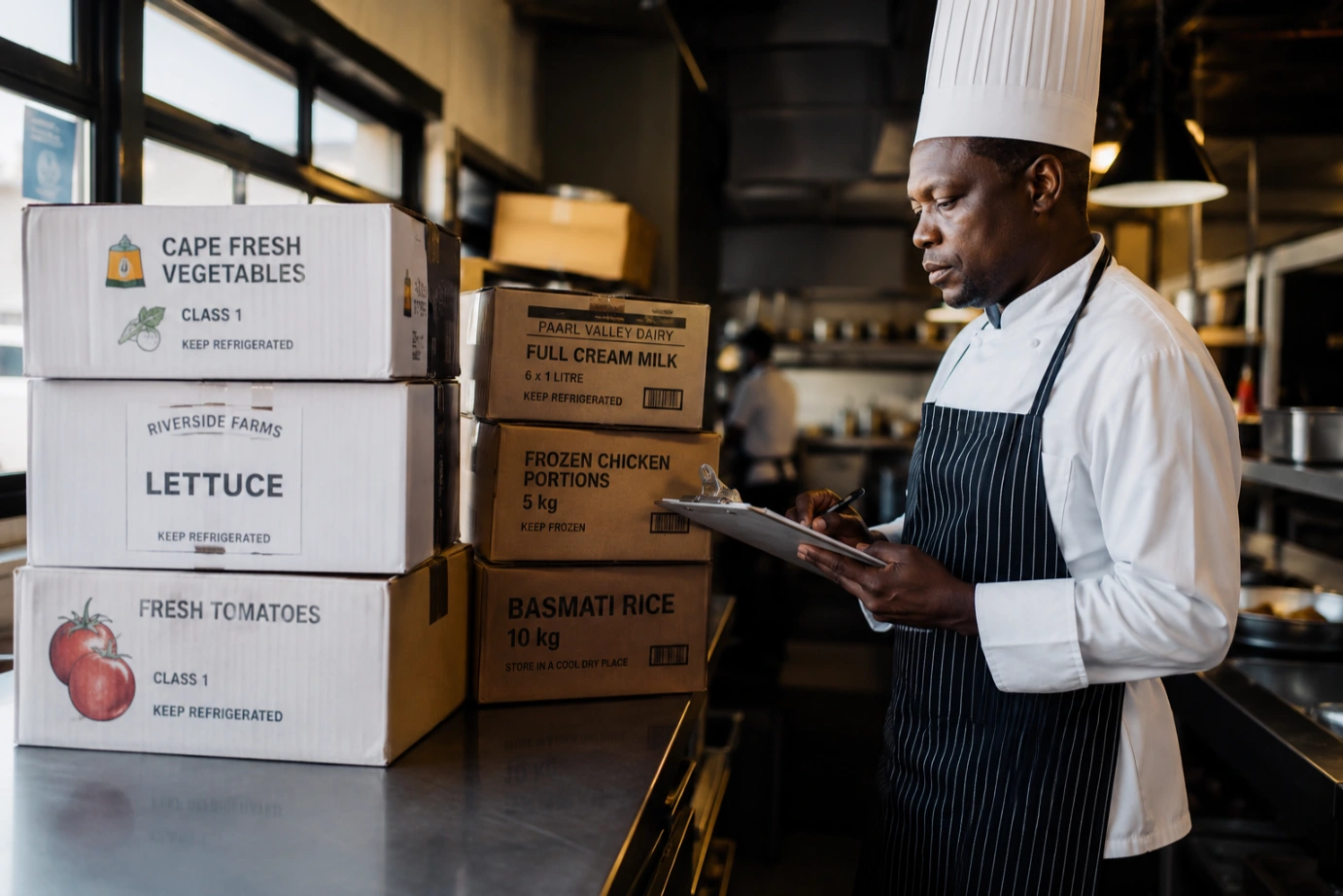
Retail procurement is about shelves; foodservice procurement is about service windows that cannot move. A restaurant cannot tell a full dining room that the sauce did not arrive, and a contract caterer cannot tell a hospital kitchen to skip a meal service. The cost of a miss is immediate and visible, which is why kitchens lean hard on suppliers who behave predictably. That pressure shapes every conversation a producer will have with a foodservice buyer.
Cost pressure makes the stakes higher still. Food and restaurant prices have kept climbing into 2026, with restaurants among the categories recording higher annual increases according to the latest consumer price index data from Statistics South Africa. When input costs rise, operators squeeze waste and supplier risk out of the system first. A producer who can hold steady pricing and steady supply suddenly becomes far more valuable than one who is merely cheap on the day.
The pressure behind every standing order
A standing order looks like a reward, and it is, but it also raises the bar. The buyer is now betting their service on the producer, so any wobble gets noticed quickly. Most foodservice relationships are won on the first three deliveries and lost on the fourth, when complacency creeps in. Treating every order with the same discipline as the first is the quiet habit that keeps a contract alive.
When the kitchen never closes
South African operations contend with realities that paper plans tend to ignore. Load shedding threatens cold chain integrity, congestion at ports and on key freight corridors delays inbound stock, and demand spikes around month-end, paydays, and big sporting weekends. A producer who can explain how the business keeps running when the lights go out earns trust fast. A producer who pretends those risks do not exist simply moves the risk onto the buyer, and buyers know it.
The three numbers that decide every foodservice relationship
Strip away the relationship talk, and three numbers do most of the deciding: lead time, case size, and the consistency of both. Nail these, and the commercial conversation gets easier, because the buyer can plan around the supply with confidence. Miss them, and even a beautiful product becomes a liability. This is the heart of foodservice procurement best practices South Africa operators apply, whether they say so out loud or not.
Lead times that survive a bad week
A lead time is only useful if it holds on a bad week, not just a quiet one. Buyers want a realistic range and a clear explanation of what pushes an order to the slower end, such as packaging delays, a complex changeover, or a seasonal rush. Quoting a best-case lead time and then missing it repeatedly does more damage than quoting an honest, slightly longer one. Predictability is the product almost as much as the food itself.
How buyers stress-test a lead time
Expect a sharp buyer to probe the gap between a quiet week and a peak week. They will ask how repeat orders compare to new lines, how long artwork or label sign-off takes, and what happens when a forecast turns out wrong. They are listening for a process, not a hopeful guess. A supplier who answers with a clear method usually delivers with one too.
Case sizes and pack formats that fit the kitchen
Case sizes are where many promising products quietly come unstuck. A pack that suits a retail shelf may be wrong for a busy kitchen that needs portion control, fast handling, and minimal waste. A caterer plating hundreds of covers needs formats that move quickly through prep, while a small cafe may choke on a case that is too large to use before it turns. Matching the pack to how the kitchen actually works signals that a producer understands the channel.
Consistency treated as a contract, not a hope
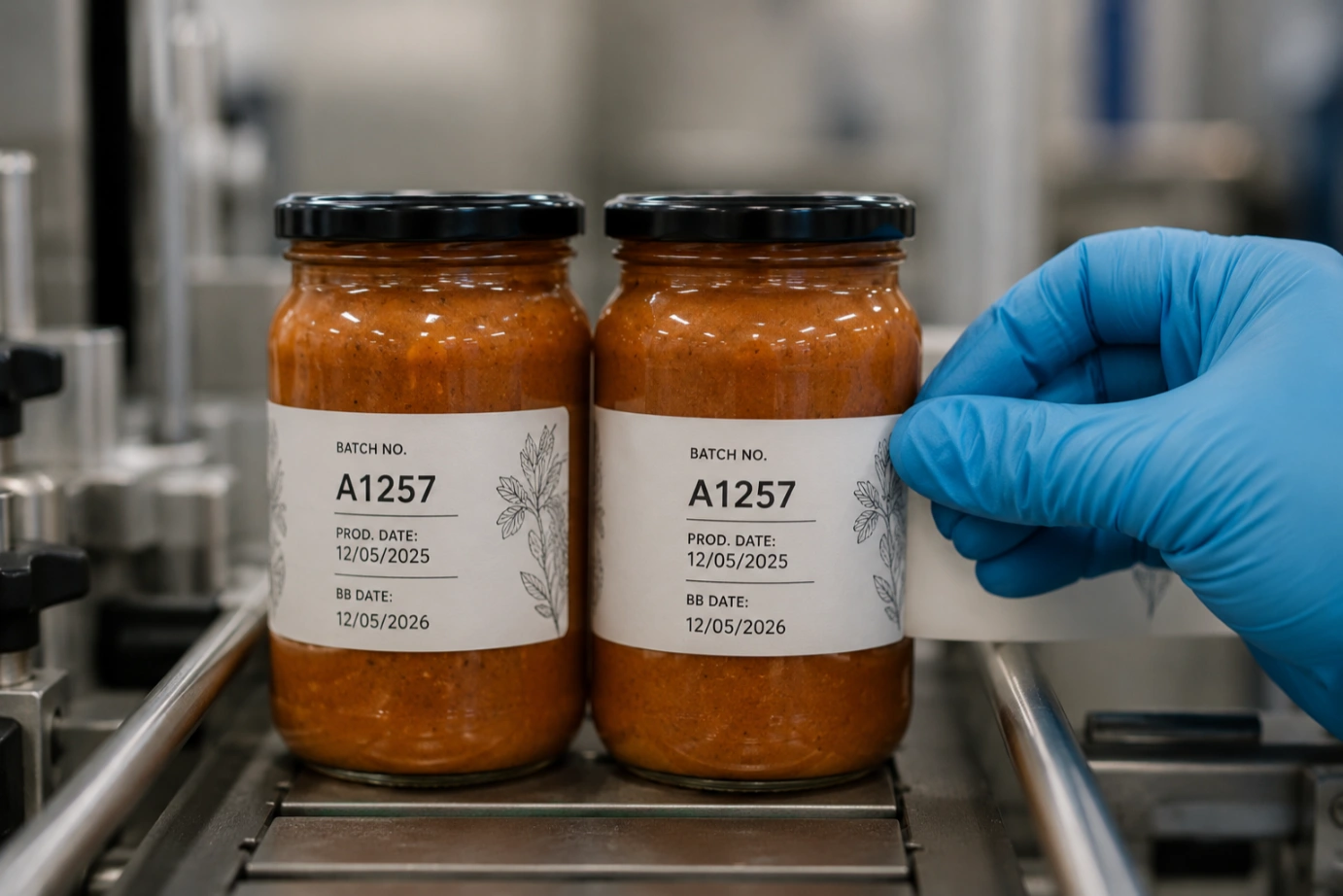
Consistency is the trait foodservice buyers prize most, because a recipe depends on inputs behaving the same every single time. A sauce that tastes slightly different between batches forces the kitchen to adjust, and that is exactly the headache they are paying to avoid. Consistent weight, colour, texture, and flavour across batches is what turns a trial order into a long contract. Strong batch records and basic quality release discipline are how a producer proves it, rather than merely claiming it.
MOQ management without tying up the cash flow
Minimum order quantities sit right at the centre of foodservice procurement South Africa, because they affect both parties’ cash and storage at once. A buyer does not want a storeroom full of stock that ages before it sells, and a producer cannot run uneconomic micro-batches forever. Good MOQ management finds the number that keeps a production line efficient without forcing the buyer to overcommit. It is a negotiation, not a fixed rule handed down from on high.
Reading an MOQ properly before agreeing to it
An MOQ is more than a quantity; it is a signal about how the supplier runs the business. A very high minimum may point to long changeovers or thin margins, while a suspiciously low one may hide instability. Buyers should ask what drives the number and whether it shifts with packaging, flavour variants, or seasonal demand. Understanding the why behind the MOQ prevents nasty surprises three orders in.
Negotiating quantities that suit both sides
The healthiest arrangements often start with a modest trial quantity and a clear path to scale as trust builds. A producer might offer a lower introductory MOQ in exchange for a forecast, which makes supply planning easier on both sides. Buyers, in turn, can commit to a rolling order pattern that lets the supplier plan production runs efficiently. When both parties share information honestly, the MOQ stops being a fight and becomes a shared plan.
Supply planning that absorbs the shocks
Supply planning is the unglamorous work that keeps a foodservice relationship boring, in the best possible way. It means matching production capacity to demand, holding sensible buffer stock, and having a fallback when something inevitably goes sideways. A producer who plans well rarely has to make panicked phone calls or beg for an extension. That calm is exactly what a kitchen wants on the other end of the line.
Forecasting for a lumpy demand curve
Foodservice demand is rarely a smooth line; it bunches around events, seasons, and paydays. A shared forecast, even a rough one, lets a supplier pre-position ingredients and schedule production before the rush arrives. Producers who ask for a forecast and then actually use it stand out, because most do not bother. Treating forecasting as a joint exercise rather than guesswork is a hallmark of mature supply planning.
Buffer stock versus working capital
Buffer stock protects against the bad week, but it also locks up cash, so the right level is a balance, not a maximum. Too little, and one delay turns into a stockout; too much, and working capital sits idle on a shelf, ageing toward waste. The answer depends on shelf life, lead time reliability, and how critical the line is to the kitchen’s menu. A producer who can discuss this trade-off intelligently is one a buyer can build a long relationship with.

How to choose foodservice suppliers South Africa operators can rely on
Choosing well is a risk decision before it is a price decision. The cheapest quote means nothing if the deliveries are erratic or the compliance paperwork does not hold up. Operators in catering, hospitality, and quick service increasingly run a structured check before committing, and producers who arrive ready for that check win the business faster. A useful starting point is the supplier vetting checklist for food businesses, which sets out the proof buyers expect to see.
The proof a foodservice buyer should ask for
A buyer wants evidence that the basics are controlled, not assurances that they are. That means current compliance documents, a label that matches the product on offer, a clear product specification, and traceability that can survive a quick trace exercise. Compliance starts with meeting the general hygiene requirements for food premises and the transport of food, which underpin every legitimate foodservice supply arrangement. A producer who hands over a clean proof pack in one go signals readiness more loudly than any sales pitch.
Red flags that signal trouble later
Some warning signs show up early if a buyer is paying attention. Watch for vague answers about capacity, lead times that only work in theory, mismatched dates on documents, and labels that promise claims with no supporting evidence. Watch, too, for a producer who cannot name who signs off on quality release. These are not small admin issues; they are previews of how the relationship will behave under pressure.
Foodservice procurement best practices South Africa: a working checklist
Bringing it together, a practical buyer’s check runs roughly like this. Confirm compliance and traceability first, because they are the gate. Then pressure-test lead times against a peak week, confirm case sizes suit the operation, and agree MOQs with a clear path to scale. Finally, request a shared forecast, agree on buffer-stock expectations, and run a small trial order with a proper post-delivery review before committing to volume.
Producers preparing to sell into kitchens can flip this list around and treat it as a readiness self-audit. Anything on the list that cannot be answered with evidence today is a gap worth closing before the first buyer meeting. For producers weighing a manufacturing partner to scale supply, the co-packer selection checklist covers capacity, changeovers, and quality ownership in the same spirit. Getting label and claim risks sorted early also helps, which is where the food label compliance checklist earns its keep.
Where Food and Beverage Trade South Africa fits in
Strong sourcing starts with a credible shortlist, and that is exactly what the platform is built to support. Buyers can use the Food Trade Directory South Africa hub to find trade-ready producers, processors, and service providers before outreach begins, then apply the checks above to narrow the field. Producers, in turn, become easier to discover, assess, and shortlist when their details sit in a trusted reference rather than scattered across the web.
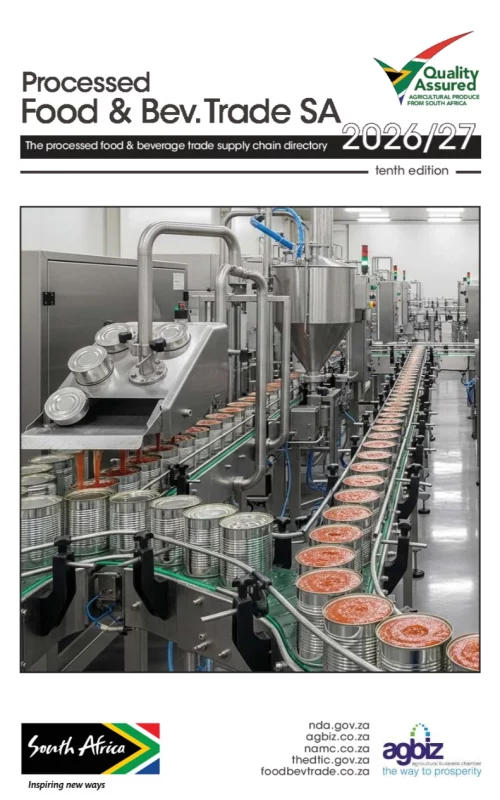
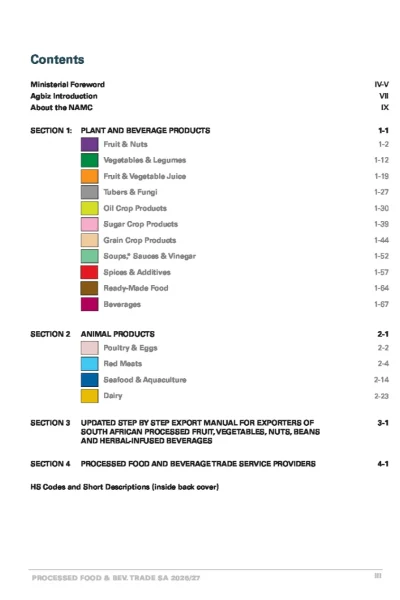
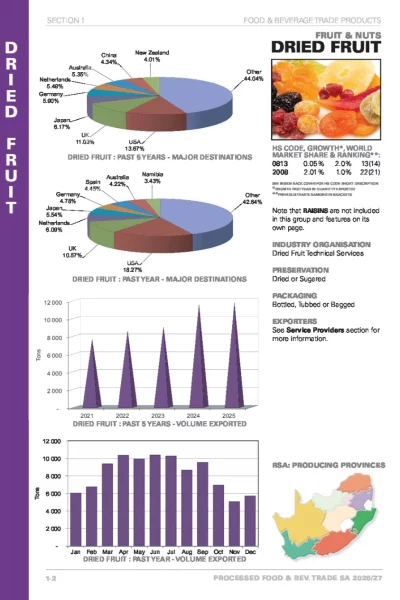
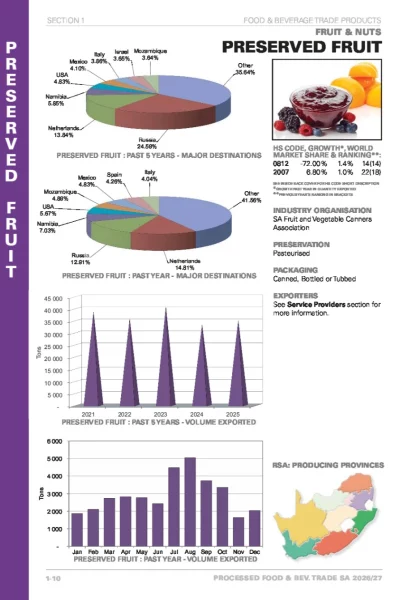
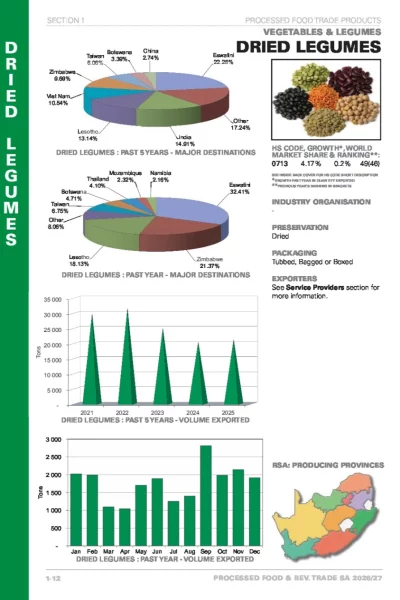
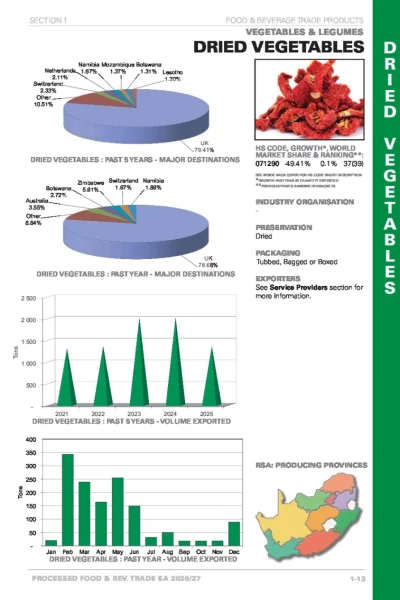
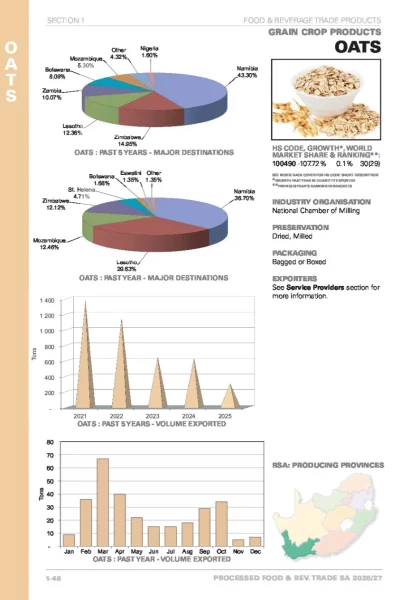
Download the Processed Food & Beverage Trade SA guide to see how manufacturers, co-packers, and ingredient suppliers present themselves to buyers, and use it to benchmark your own readiness. If your business supplies kitchens, caterers, or retailers, register to be featured in an upcoming publication so the right buyers can find you when a supply gap opens up. The aim is simple: turn a search into a shortlist, and a shortlist into a steady, trade-ready relationship.
Conclusion
Foodservice procurement is not won on the prettiest pitch; it is won on lead times that hold, case sizes that fit, and consistency a kitchen can build a menu around. Layer sensible MOQ management and honest supply planning on top, and a producer stops being a risk and starts being a stabiliser. Buyers reward that reliability with reorders, and reorders are where a small brand quietly turns into a serious one. Get the basics right, prove them with evidence, and the rest of the conversation gets a whole lot easier.
FAQ
What is foodservice procurement, and how does it differ from retail procurement?
Foodservice procurement is the sourcing of food, beverages, and ingredients for kitchens, caterers, hotels, and quick-service operators, rather than for shop shelves. The big difference is service windows: a kitchen cannot delay a meal service, so reliability and consistency matter even more than in retail. Lead times, case sizes, and batch-to-batch consistency carry extra weight. Price still matters, but it rarely wins on its own.
How long should lead times be for foodservice suppliers in South Africa?
There is no single number, because it depends on the product, the packaging, and the production process. What buyers want is an honest range and a clear explanation of what pushes an order to the slower end. A realistic lead time that holds beats a fast one that slips. Predictability is what gets a supplier reordered.
What does good MOQ management look like for a small producer?
It means setting a minimum order quantity that keeps production efficient without forcing the buyer to overcommit cash and storage. Many strong relationships start with a modest trial quantity and a clear path to scale as trust builds. Sharing a forecast in exchange for a lower introductory MOQ often suits both sides. The goal is a shared plan, not a rigid rule.
How do foodservice buyers test consistency before committing?
Buyers usually run a trial order and check weight, colour, texture, and flavour against the specification. They also look for batch records and basic quality release discipline that show consistency is controlled, not accidental. A quick traceability exercise often forms part of the check. Suppliers who pass these tests calmly tend to win longer contracts.
What proof should a foodservice supplier have ready?
A clean proof pack typically includes current compliance documents, a label that matches the product, a one-page product specification, and a traceability example. Buyers also want a clear contact point for quality and operations. Handing this over in one go signals readiness far better than a sales pitch. Missing or mismatched documents are read as risk.
How can a small producer find credible foodservice suppliers or get discovered by buyers?
Buyers can build a shortlist from a trusted directory before reaching out, then apply a structured vetting process to narrow it down. Producers become easier to find when their details sit in a credible trade reference rather than scattered online. Registering for an upcoming trade publication puts a business in front of buyers actively sourcing. From there, strong basics do the rest.