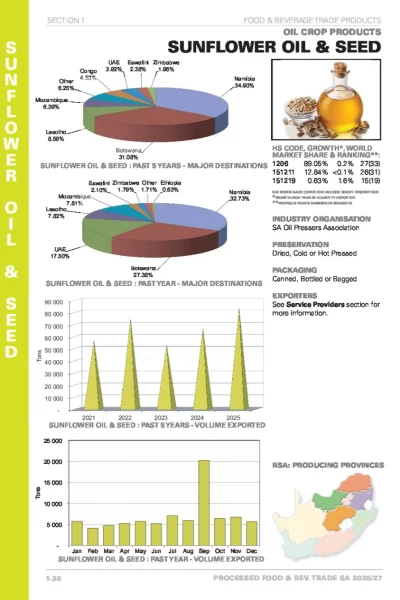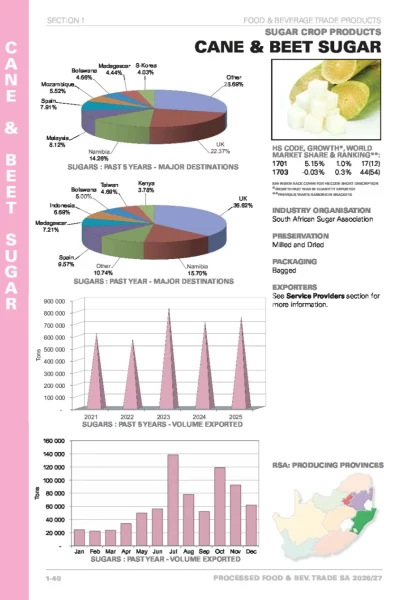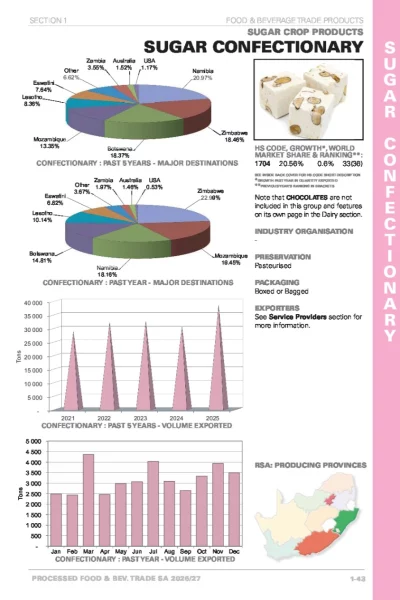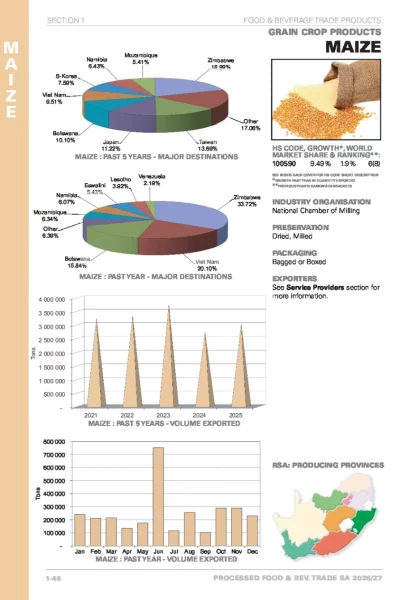
Food Trade Directory South Africa
TL;DR: Key Takeaways
Treat a food trade directory South Africa search as a shortlisting job: define requirements first, then compare suppliers on proof, not promises.
Start with category fit (product, pack formats, volumes), then validate supply continuity (capacity, lead times, back-up plans).
Ask for buyer-ready documents early: specs, allergen statements, traceability basics, and QA evidence.
Confirm commercial basics before getting excited: MOQs, case sizes, payment terms, and price review cadence.
Introduction
When a buyer is under the pump to replace a supplier, fill a gap on shelf, or rescue a production schedule, a quick search for food trade directory South Africa often follows. The catch is that “directory” can mean anything from a list of names to a genuinely useful shortlist tool.
This hub clarifies what a food supplier directory South Africa should include, how to evaluate credibility and capability, and how to find vetted food suppliers in South Africa without wasting weeks in email tennis. It also points to practical buyer tools that make supplier comparisons easier and faster.
Compelling overview of the topic
What a “food trade directory” should mean in South Africa (and what it should include)
In South Africa’s trade context, a directory only earns its keep when it supports decisions, not just discovery. A useful view combines category coverage (fresh, processed, beverage, dry, ingredients, packaging, logistics and trade services) with buyer-ready detail (formats, volumes, regions served and lead times). It also surfaces proof points (QA approach, traceability basics and documentation discipline) and makes contact routes practical (commercial contact, operations contact and escalation path).
For broader sourcing context, the food suppliers South Africa ecosystem and category splits are mapped in related resource pages like Food suppliers in South Africa and Food logistics in South Africa.
Supplier types that belong in a buyer shortlist
Depending on the category and channel, a shortlist usually includes manufacturers (including co-packers and private label partners), importers or agents for specialised inputs, and distributors or wholesalers who provide route-to-market reach. It can also include logistics and warehousing partners (ambient and temperature-controlled where relevant), plus packaging, labelling, testing and certification services that reduce onboarding friction and strengthen buyer assurance.
This approach keeps a food supplier directory South Africa search from becoming a dead-end list and turns it into a structured pipeline.
Who uses a directory-style shortlist and why it matters
A directory-style shortlist is used by retail and wholesale buyers building supplier benches, foodservice procurement teams balancing availability and case sizes, and manufacturers sourcing inputs such as ingredients, packaging and logistics. Export-facing teams also use it to identify partners with strong documentation discipline and reliable fulfilment.
For all of the above, supplier performance is not a nice-to-have. Continuity of supply, lead times, MOQs, QA and traceability discipline, claims compliance, and delivery reliability determine whether listings stay live, production runs stay on time, and customers stay happy.
Why supplier performance matters (the practical buyer view)
Performance risk tends to show up in predictable places: lead times drift over time, MOQs shift late in the process, QA evidence is unclear or inconsistent, traceability basics are weak, or delivery reliability breaks down without a clear escalation route. Each of these adds hidden admin and increases the chance of delists, production delays, or compliance exposure.
To reduce risk, buyers benefit from verifying the basics against reputable compliance sources. For example, suppliers should be able to align labels and claims with the Department of Health regulations on labelling and advertising of foodstuffs.
For regulated categories, oversight can be influenced by compulsory specifications and inspection approaches outlined by bodies such as the NRCS guidance on regulated food and food products.
For export-facing supply chains, documentation and process discipline matters; the the dtic Export Help Desk “Learn to Export” guidance is a useful reference point when building export-ready workflows.
Food trade directory supplier shortlisting checklist
| Criterion | What a buyer should ask/verify |
|---|---|
| Product/category fit | Which SKUs, pack formats, allergens, and specs are standard vs custom? |
| Capacity + continuity | What monthly capacity exists, what is the back-up plan, and what triggers allocation? |
| Lead times + cut-offs | Standard lead times, rush options, peak-season constraints, and order cut-off times. |
| MOQs + case sizes | Minimum order, minimum run, pallet configuration, and mixed-load rules. |
| QA + food safety | Which QA system is used, how non-conformances are handled, and audit readiness. |
| Traceability basics | Batch coding approach, retention samples (where relevant), and recall workflow. |
| Documentation pack | Spec sheet, allergen statement, shelf-life info, and any certificates used in trade. |
| Delivery coverage | Regions served (national vs regional), 3PL partners, and cold chain capability if needed. |
| Pricing structure | Price list format, review cadence, rebates/allowances (if applicable), and freight treatment. |
| Service levels | Fill-rate targets, complaint handling, and escalation contacts with response times. |
To make those checks repeatable, the three tools below slot neatly into a buyer workflow:
Supplier vetting checklist
South African supply chains are practical and regional. Gauteng buyers often prioritise national delivery coverage, predictable cut-off times, and cross-dock reliability, while Western Cape sourcing may balance port access, production proximity, and seasonal flow. KZN can be particularly sensitive to delivery windows and route planning, especially for temperature-controlled categories. The key is to decide upfront: does supply need to be national, or will a regional supplier outperform on service levels?
A food trade directory South Africa shortlist should force commercial clarity early. Confirm MOQs, lead times, and payment terms in writing, alongside warehousing arrangements and service levels (fill rates, escalation, and claims handling). Documentation expectations should also be agreed upfront: buyer-ready specs, allergen statements, batch coding conventions, and any certificates or audit evidence used in trade discussions. If a supplier cannot share a clean document pack and basic service commitments within a set time window after first contact, that is a signal that onboarding risk and ongoing admin load will be higher than expected.
Benefits — outcomes that matter
For buyers, a directory-led process means faster comparisons, fewer back-and-forth emails, and clearer expectations around compliance and delivery before onboarding starts. A strong food trade directory South Africa hub also reduces “hidden work” by standardising what gets requested (and when), so suppliers are compared on the same criteria instead of whoever replies fastest.
For suppliers, inclusion in directory-style annual guides can increase discoverability with trade buyers who are actively searching and building shortlists. The advantage is not hype; it is simply being easier to find and easier to assess when key information is organised in a buyer-friendly format.
Call-to-Action
Download one of our latest eBooks
Buyer-ready reference guides organised to support faster supplier discovery and shortlisting.
Register your business to be featured in upcoming publications.
Platform Overview
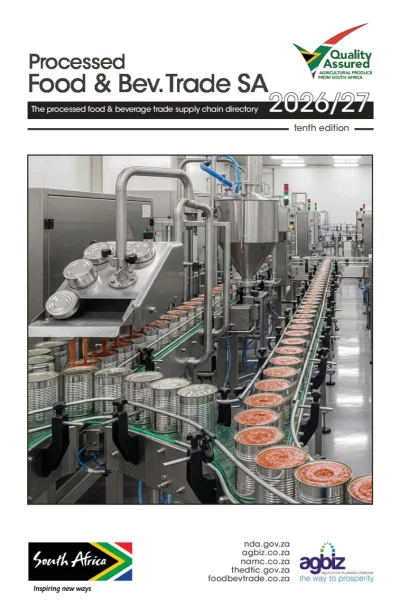
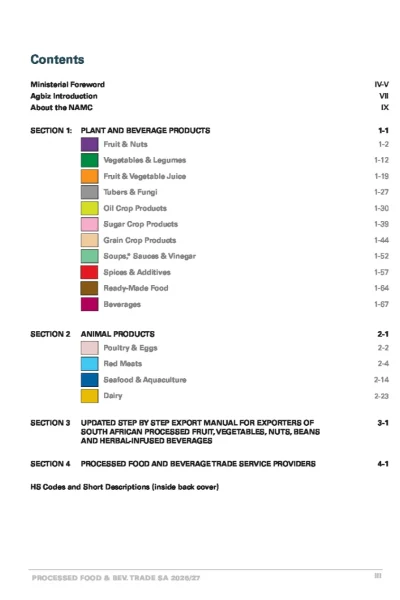
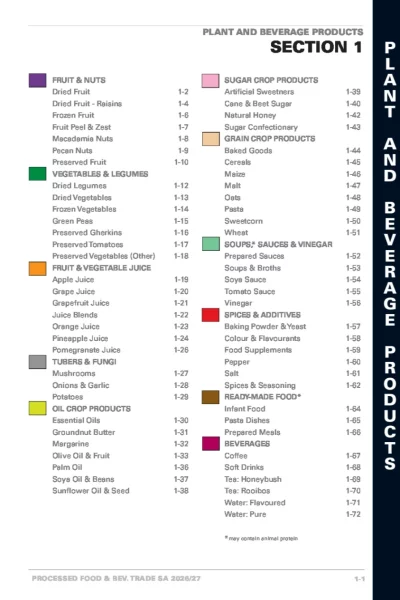
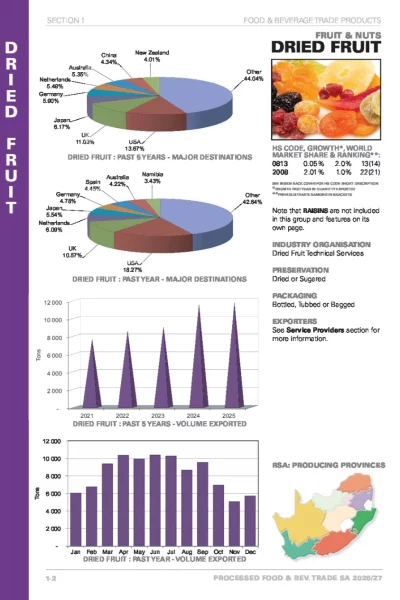
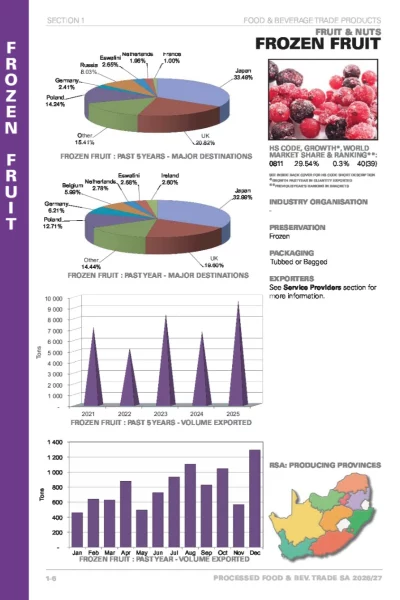
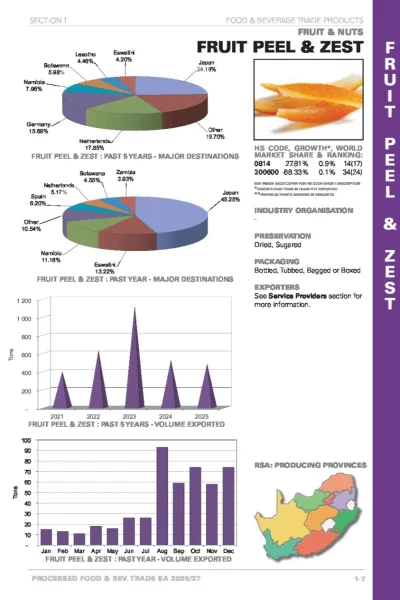
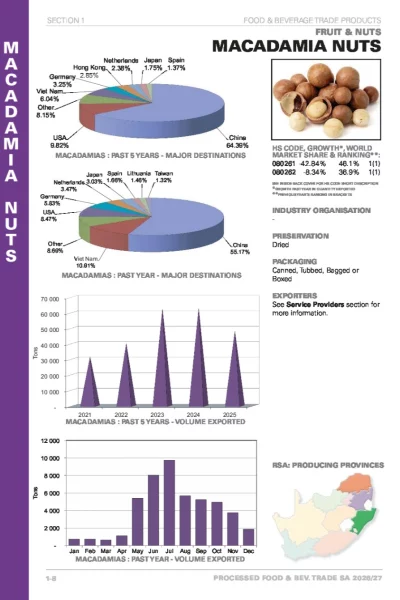
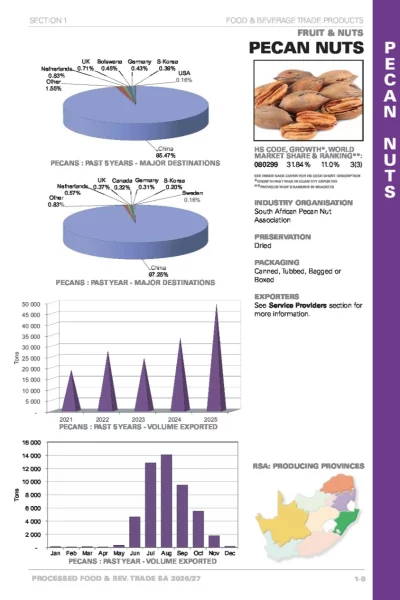
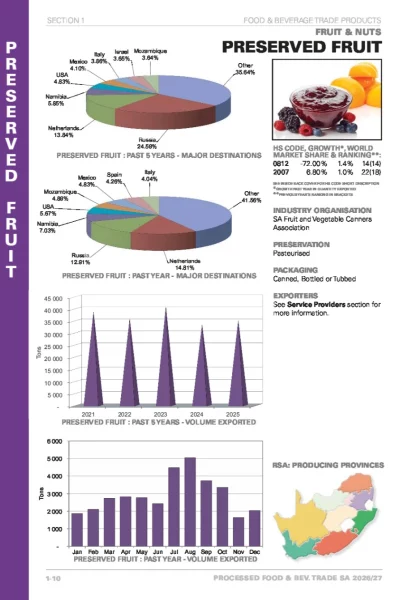
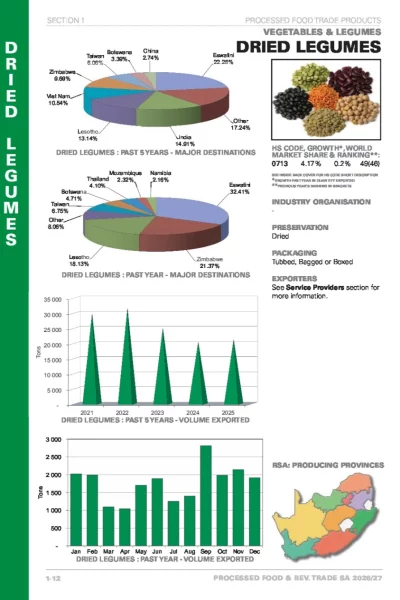
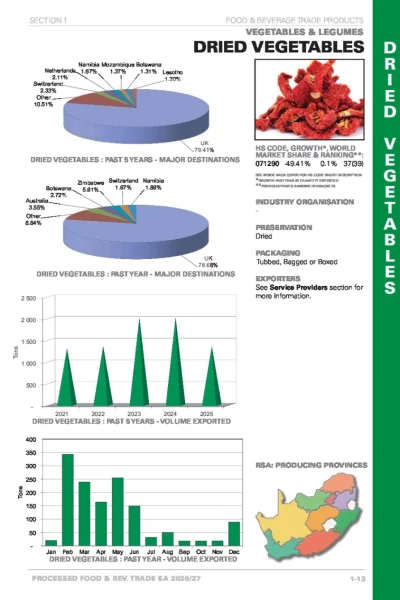
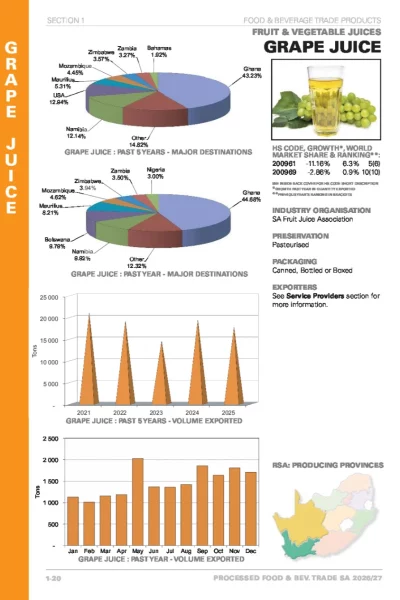
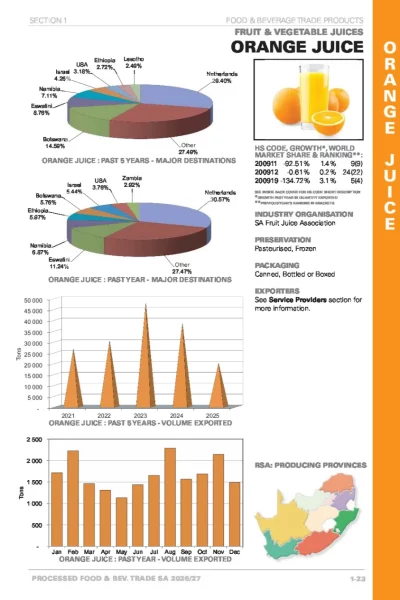
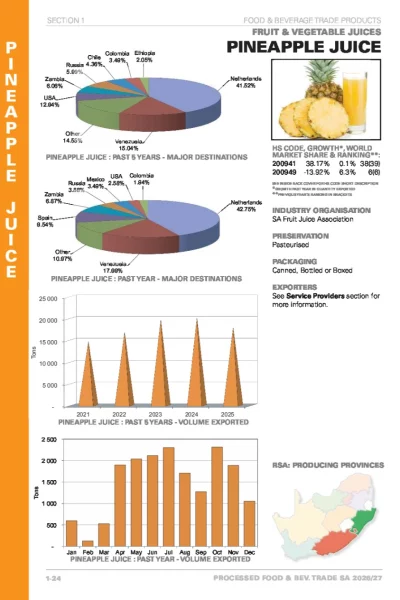
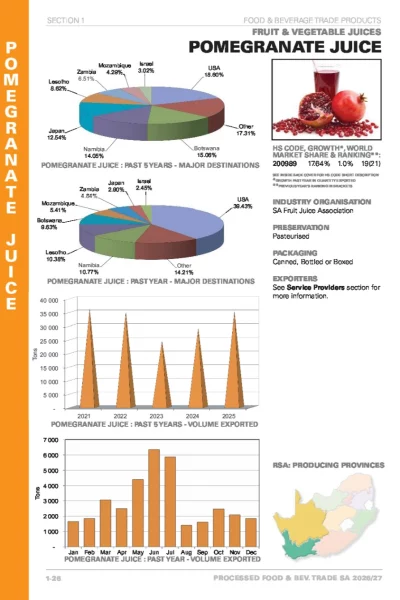
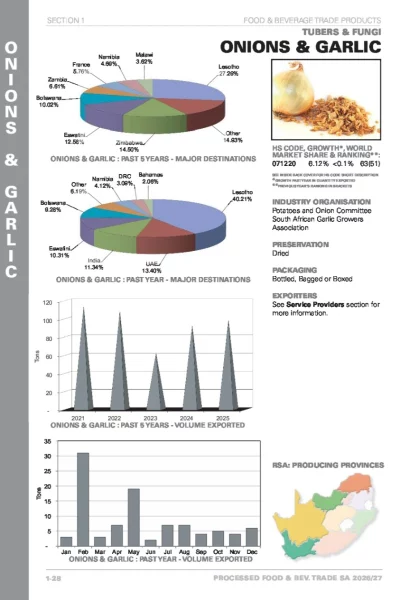
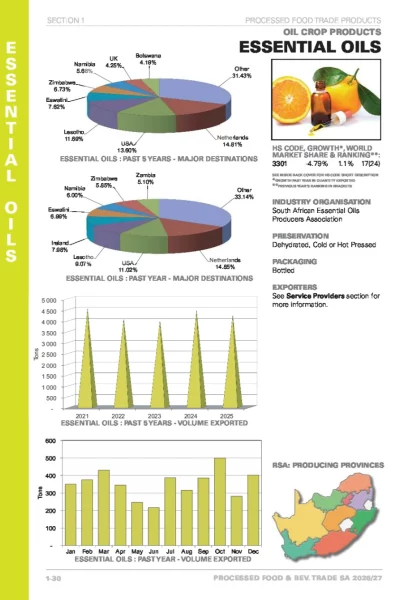
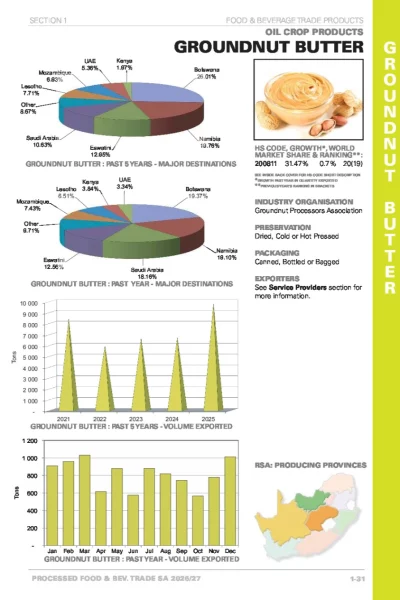
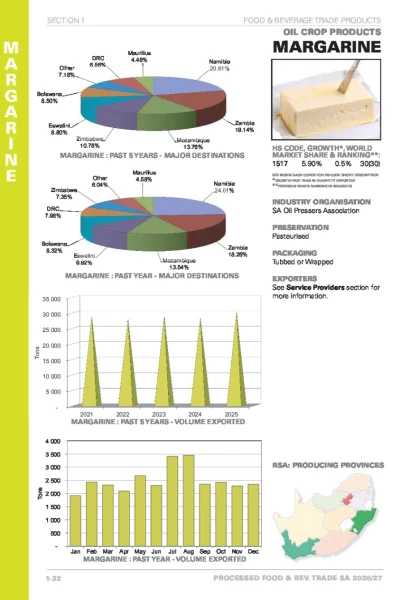
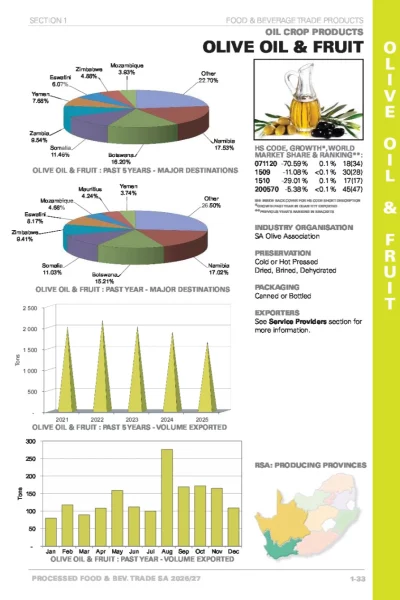
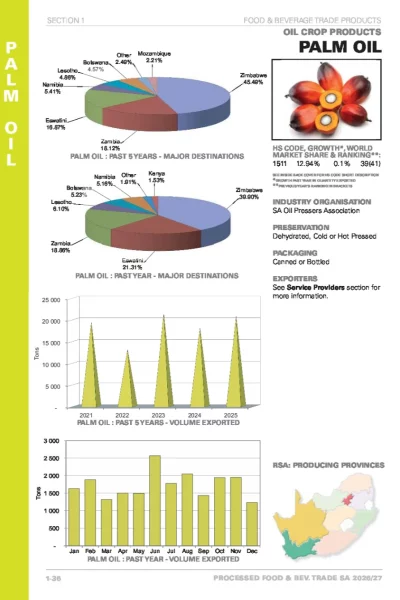
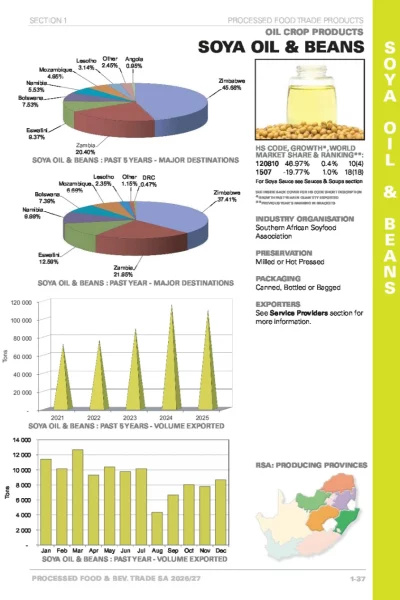
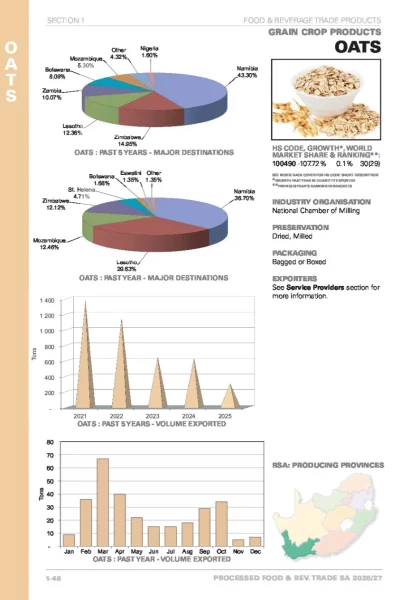
Food and Beverage Trade South Africa is a publisher and trade resource hub that connects buyers and suppliers through annual publications (downloadable PDFs through our Pop-up Form) and practical trade content. The guides support a directory-style approach to sourcing, without offering supplier listings on the website.
Current publications include:
Business registration supports inclusion in future editions of these publications, rather than website supplier listings.
FAQs
What MOQs are typical for wholesale food suppliers South Africa?
MOQs vary widely by category and production setup. Ask for MOQ, minimum run, pallet configuration, and whether mixed loads or mixed cases are allowed.
What lead times should be expected from FMCG suppliers South Africa?
Lead times depend on whether stock is held or made-to-order. Confirm standard lead time, rush options, peak-season constraints, and order cut-off times before onboarding.
Do suppliers deliver nationally or only in certain provinces?
Many suppliers service specific corridors first (for example, Gauteng-only or Western Cape-only) and use partners for other regions. Confirm delivery regions, minimum drop sizes, and whether cold chain is controlled end-to-end when required.
Which QA systems and evidence are reasonable to request?
A buyer-ready pack usually includes specs, allergen statements, shelf-life details, and a summary of food safety controls. Where relevant, request audit evidence and a clear non-conformance and recall process.
What documentation is needed to compare suppliers fairly?
Use a single RFQ and spec template so every supplier quotes against the same assumptions. Request price structure, freight treatment, payment terms, and a contact for operations escalation.
How should pricing be assessed without wasting time?
Compare like-for-like units (case, kg, litre), confirm pack size, and agree a price review cadence. Clarify whether rebates, promotional support, or allowances apply in the channel.
How should stock-outs and substitutions be handled?
Ask for fill-rate targets, substitute rules, and how shortages are communicated. Prefer suppliers that provide early warnings and realistic recovery timelines.
What is the simplest way to shortlist vetted food suppliers South Africa?
Start with category fit and delivery coverage, then validate documentation and service commitments using a scorecard. A directory-style guide can speed up discovery by grouping suppliers and services in one place for comparison.