Introduction
It is still early, and the kettle has barely boiled when the first buyer email arrives. A request for a sample becomes a request for a pack spec, and then, very quickly, a request for proof. In that moment, the product is no longer only about flavour, it is about whether the packaging will survive distribution, pass compliance checks, and scan at the till.
For many SMEs, the fastest way to lose a listing is not taste, it is packaging friction. That is why choosing packaging suppliers South Africa food becomes a buyer-readiness decision, not a back-office errand. When shortlisting packaging suppliers South Africa food, the pack has to work for buyers, not only for marketing.
Get the pack right, and the conversation moves forward. Get it wrong, and the product gets rejected before it ever reaches a shelf.
Table of Contents:
TL;DR: Key Takeaways
- Buyers reject packs that fail compliance basics, shelf fit, or barcode readability.
- Use a packaging compliance checklist for FMCG South Africa before approving print.
- Sustainable packaging South Africa FMCG only works when performance and proof match the claim.
- Packaging suppliers South Africa food should be assessed on lead times, traceability, and change control.
Why packaging becomes the make-or-break gate in FMCG
In FMCG, packaging does three jobs at once: protect the product, carry compliant information, and make buying easy. Buyers and category teams see packaging as operational risk, not decoration. When packaging fails, returns, delistings, and customer complaints follow, and nobody wants that headache.
This is where procurement starts thinking in checklists and exceptions. In practice, packaging suppliers South Africa food are measured against the buyer’s risk list before price is even discussed.
Packaging suppliers South Africa food that can show repeatable controls become low-risk partners. Those that cannot prove consistency often get filtered out early, even if the unit price looks attractive.
The buyer’s first scan is not the barcode, it is the risk
A buyer tends to ask one silent question first: “What can go wrong if this pack enters the system?” That question covers leaks, seal integrity, label permanence, and compliance wording. It also covers whether packaging changes are managed, because silent changes create silent failures.
A good supplier understands this mindset and provides proof up front. That proof usually looks like datasheets, ink and adhesive specs, migration or suitability statements where relevant, and controlled artwork files. This is why packaging suppliers South Africa food are often judged by paperwork quality as much as print quality. If packaging suppliers South Africa food cannot supply clean documentation, the buyer assumes the process is also messy.
What gets rejected fast, even when the product is excellent
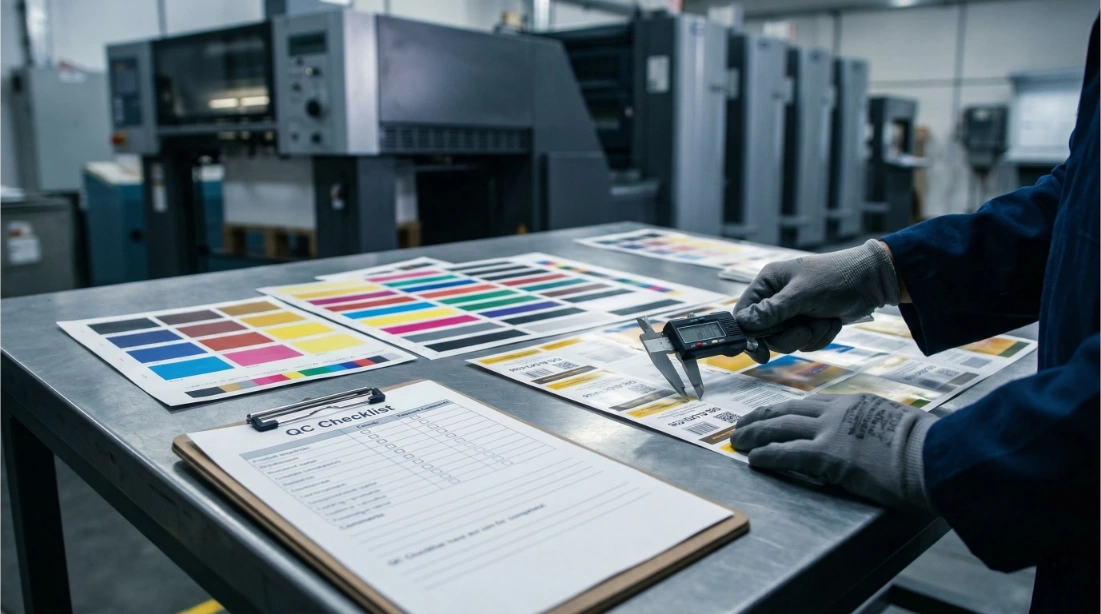
Packaging rejection is usually predictable. The same patterns show up across retail, wholesale, and foodservice. Fixing them early is cheaper than reworking printed stock later. A disciplined packaging suppliers South Africa food shortlist reduces that waste quickly.
Non-compliant labelling and claims
Missing mandatory information, incorrect allergen statements, or claims that cannot be supported are common deal-breakers. Small typography and poor contrast also get flagged because the consumer-facing label must be readable. The safest approach is to align artwork to South African labelling rules before any print run, using the Department of Health food labelling and food control regulations.
Barcodes that do not scan reliably
If the barcode fails at the till, the product fails in practice. Buyers often test scanning under real lighting and speed conditions. Poor quiet zones, low contrast, wrong size, or poor print quality lead to rejections. This is a common failure point when packaging suppliers South Africa food are chosen without barcode validation.
Pack formats that do not fit shelf, case, or distribution flow
A premium jar can still be a problem if it does not stack, breaks under vibration, or wastes shelf space. Case sizes that do not match pallet patterns or store handling routines become friction. Buyers may not say it, but they notice when a pack is “difficult”.
Inconsistent supply and uncontrolled substitutions
A label stock change, a resin change, or a glue substitution can shift performance without any visual warning. That is why buyers ask about change control and whether the supplier issues written change notifications. Packaging suppliers South Africa food that run disciplined controls tend to keep buyer confidence longer. The goal is to find packaging suppliers South Africa food that stay consistent across repeat runs.
Packaging compliance South Africa: the minimum viable standard buyers expect
Compliance is not only about passing an inspection, it is about avoiding expensive reprints. The easiest way to think about it is a “minimum viable pack” that meets legal and trading requirements. Once that baseline is stable, branding and sustainability can be layered on top, without changing the core pack every month. Packaging suppliers South Africa food that support stable baselines are easier to scale with.
The three compliance buckets that matter most
The first bucket is label content: product name, net quantity, ingredient list, allergen declaration, storage instructions, batch and date marking where applicable, and responsible party details. The second bucket is presentation: legibility, language, and placement that remains readable after handling. The third bucket is claims and marketing statements: nothing misleading, and nothing that implies a health benefit without support.
For SMEs, a practical approach is to maintain a master label checklist and a sign-off trail. When artwork changes, the checklist gets re-run, and the sign-off becomes the evidence. This keeps packaging compliance South Africa from becoming a last-minute panic.
Date coding, batch IDs, and traceability on the pack
Even small brands get asked about traceability. Batch identifiers must be legible, durable, and placed where they will not be rubbed off in crates or chillers. If the pack is being supplied through multiple channels, coding must remain consistent across variants.This is where a supplier’s printing consistency matters. Packaging suppliers South Africa food that understand traceability will protect coding and version control.
Packaging suppliers South Africa food that can keep coding windows clear and stable help SMEs avoid recall chaos. It is a simple detail that earns trust fast.
Sustainable packaging South Africa FMCG: what buyers really mean
Sustainability has moved from nice-to-have to a buyer question. The trap is treating it as a marketing line rather than a design constraint. Buyers want proof that sustainable packaging South Africa FMCG choices still perform under heat, humidity, and handling. Many buyers now ask which packaging suppliers South Africa food are used and whether they can support the sustainability targets.
Performance first, then sustainability claims
A recyclable pack that leaks is not sustainable, it is waste. A compostable film that cannot hold seal integrity is a reputational risk. Buyers typically want to see the performance testing story, not only the green label on the carton.
This is also where packaging suppliers South Africa food are expected to guide material choices. A supplier that can explain trade-offs clearly tends to reduce rework cycles. When packaging suppliers South Africa food can explain these trade-offs, approvals move faster.
A supplier that sells a trend without context tends to create expensive mistakes.
EPR expectations and what that means for packaging choices
Extended Producer Responsibility has become part of the packaging conversation. Producers and their producer responsibility organisations must register and meet requirements under South Africa’s EPR framework, which influences packaging reporting and recovery planning. It is worth checking the Department of Forestry, Fisheries and the Environment EPR registration guidance to understand obligations and documentation.
Buyers do not always ask “Are you registered?” in the first meeting. The question often arrives later, when procurement starts checking governance. Being ready avoids an awkward back-and-forth. It also signals that packaging suppliers South Africa food are being managed as part of a compliant system.
How buyers vet packaging suppliers before approving a range
Buyers and technical teams usually vet the supply chain behind the pack. This is where SMEs can look professional quickly by showing a clear selection process. Packaging suppliers South Africa food that expect scrutiny will help with this, because it shortens the sales cycle. Strong packaging suppliers South Africa food often provide a standard onboarding pack for audits.
Capability and scope
Start with basics: can the supplier produce the format, material, and finish at the required scale. Check whether the supplier can handle colour consistency, varnish requirements, and regulatory inks where relevant. Ask whether there are minimum order quantities that match growth plans.
Quality controls and inspection routines
A serious supplier can explain how defects are prevented and how they are detected. Look for incoming material checks, in-process checks, and final inspection rules. If the supplier cannot describe a repeatable routine, that is a red flag. Reliable packaging suppliers South Africa food can show inspection records and defect trends.
Lead times, continuity, and contingency
Lead times are not only about production, they include raw material availability, plate or die readiness, and dispatch reliability. Ask how the supplier handles peak season demand, and what happens if a machine goes down. If packaging suppliers South Africa food cannot explain continuity planning, the risk is higher than it looks.
Packaging suppliers South Africa food that plan contingencies reduce the risk of stockouts.
Documentation and change control
A simple test is to request the last change notification the supplier issued to any client. If there is a system, there will be a paper trail. If there is no system, changes happen quietly, and that is where rejections start.
A packaging compliance checklist for FMCG South Africa that fits on one page
A checklist works best when it is short and used every time. Keep it as a pre-flight review before print approval. Many SMEs keep the checklist with supplier records so packaging suppliers South Africa food decisions stay consistent.
This reduces the “oops” moments that come after pallets are already delivered.
Label content checks
Confirm the product name, net quantity, ingredient list, allergen declaration, storage instructions, and responsible party details. Confirm batch and date marking requirements and whether the coding area is protected. Confirm claims and marketing statements match the product evidence.
Print and scan checks
Confirm barcode size and placement, and run real-world scans from multiple angles. Confirm contrast and quiet zones, and test on the actual substrate. Confirm that inks, adhesives, and finishes are suitable for temperature and moisture conditions.
Distribution and handling checks
Confirm pack durability in the channel, including humidity, vibration, and stacking. Confirm outer case labelling, case size logic, and pallet stability. Confirm that the pack survives realistic handling without scuffing critical information.
Label printing suppliers: what to ask before placing the first order
Label printing suppliers are often the fastest route to market for small brands. The risk is that speed can hide mistakes. A short set of questions can protect the launch.
Ask what file formats are required and how artwork changes are managed. Ask how colour is controlled across batches, and whether there is a proofing process that matches the final substrate. Ask what happens when labels are stored in heat, cold, or high humidity, because that is real life in South African distribution.
If the answers feel vague, slow down. A small delay is better than a full relabel. Packaging suppliers South Africa food that take these questions seriously usually deliver smoother first runs.
If the answers feel vague, slow down. A small delay is better than a full relabel. Packaging suppliers South Africa food that take these questions seriously usually deliver smoother first runs.
Packaging suppliers South Africa food: questions that separate solid partners from risky ones
A supplier interview does not need to be confrontational. It can be practical, like a site walk-through or a call with a checklist. The goal is to learn how predictable the supplier is under pressure. Predictable packaging suppliers South Africa food partners reduce surprises during promotions and seasonal spikes.
Questions buyers tend to respect
Ask for standard lead times by material and format, and ask what causes delays. Ask how defects are recorded and how root causes are fixed. Ask whether there is a single point of accountability for quality issues.
Questions that reveal maturity quickly
Ask how many client SKUs are managed and how artwork versions are controlled. Ask what happens when raw materials are substituted. Ask whether there is a documented corrective action process and whether it is shared with clients.
When the answers come with clear examples, confidence grows. When the answers come with hand-waving, the risk is usually higher than it looks.
Building a shortlist: where Food and Beverage Trade South Africa helps
A shortlist is easier when discovery starts with credible categories. Food and Beverage Trade South Africa is built for that purpose, combining buyer-ready guidance with directory-style discovery. For a broader supplier scan across categories, use the platform’s food trade directory South Africa to identify relevant services before approaching individual suppliers.
When packaging is part of a bigger supply chain build, it also helps to understand adjacent risks. Cold chain and distribution decisions affect label durability and pack performance, so reviewing cold chain logistics in South Africa can prevent surprises. For brands considering outsourced manufacturing, the co-packers and contract manufacturing in South Africa guide supports better alignment between pack specs and production realities. When the goal is stronger visibility while building that supplier pack, the practical guide to SEO for food businesses in South Africa helps turn searches into qualified enquiries.
Implementation playbook for SMEs: a practical 14-day packaging sprint
A good packaging process is a short sequence repeated consistently. Treat it like a sprint with clear deliverables. The outcome is a pack that performs, complies, and can be supplied reliably.
Days 1 to 3: confirm the channel and pack constraints
Confirm which channel is being targeted first, because retail, foodservice, and export behave differently. Confirm shelf dimensions, case constraints, and expected storage conditions. Confirm which pack elements must be stable across all variants.
Days 4 to 7: run the compliance and barcode checks
Build or update the packaging compliance checklist for FMCG South Africa. Validate label content against current requirements, and validate barcode quality on the chosen substrate. Lock the artwork version and create a change log entry.
Days 8 to 11: test for handling and environment
Do a basic handling test: stacking, vibration simulation, and humidity exposure. Test adhesive performance and label scuff resistance in realistic conditions. Log failures, fix the design, and repeat the test once.
Days 12 to 14: lock the supplier pack and document the proof
Confirm the supplier’s lead times, MOQs, and contingency approach in writing. Save the approved artwork files, proofs, and signed checklists in one folder. That folder becomes the proof pack when buyers ask, and it reduces friction. It also helps compare packaging suppliers South Africa food on evidence instead of opinions.
Conclusion
In FMCG, packaging is the silent deal-maker. Buyers want packs that comply, scan, survive distribution, and stay consistent across repeat orders. That is why choosing packaging suppliers South Africa food is a strategic move that protects market access. The right packaging suppliers South Africa food partner keeps the pack stable while the business grows.
Sustainable packaging South Africa FMCG choices can support brand trust, but only when performance and proof come first. A simple packaging compliance checklist for FMCG South Africa keeps teams aligned and prevents expensive reprints. When the pack is buyer-ready, the product has a fair shot at becoming a repeat order, not a once-off conversation.
FAQ
What is the biggest reason buyers reject packaging in South Africa?
Most rejections come from non-compliant label content, unreadable barcodes, or packs that fail handling and storage realities. Buyers see these as avoidable risks. A short pre-flight checklist prevents most issues.
How early should packaging suppliers be involved in product development?
Packaging suppliers should be involved before finalising the pack format and label claims. Early input prevents material choices that fail sealing, coding, or distribution conditions. It also reduces redesign cycles.
Does sustainable packaging South Africa FMCG automatically improve buyer acceptance?
Not automatically. Buyers still prioritise performance, shelf fit, and compliance. Sustainability helps when the material choice is credible, testable, and matched to the route-to-market.
What should be included in a packaging compliance checklist for FMCG South Africa?
Include label content checks, barcode checks, print and substrate checks, and handling checks. Add a sign-off step and version control. Keep it short enough to use every time.
How can label printing suppliers be evaluated quickly?
Ask about proofing, colour control, defect handling, and change control. Request examples of previous corrective actions. Reliable suppliers can explain routines clearly and share documentation.
How many internal documents should be kept for buyer proof?
Keep a single pack folder with the approved artwork, proofs, supplier specs, and the signed checklist. Add change logs for any updates. This makes buyer audits faster and calmer.
What is the practical next step if packaging is already printed but seems risky?
Pause distribution to key buyers and run scanning and handling tests first. If risk is confirmed, plan a controlled relabel or over-sticker approach within compliance rules. Document the corrective action to protect credibility.