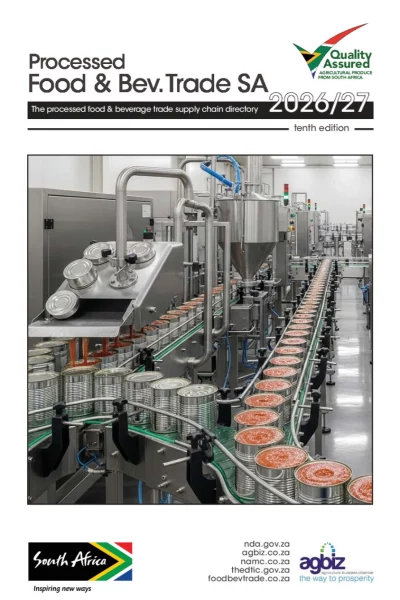
Register to receive a free download link via your email address
We respect your privacy, do not tolerate spam and will never sell or give away your personal information to any third party.
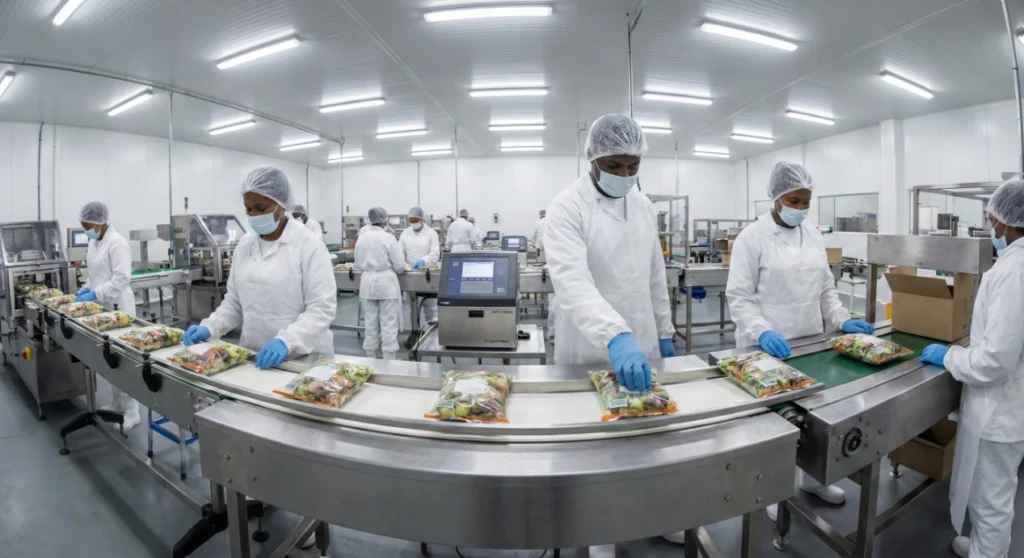
A procurement team is shortlisting Co-Packers South Africa for an upcoming production cycle, but capacity alone is not enough. The decision usually hinges on QA maturity, lead time reliability, packaging compatibility, and whether the documentation pack will pass onboarding checks without repeated clarification.
This hub explains how Co-Packers South Africa operate within the local food and beverage supply chain, when contract manufacturing outperforms in-house production, and how buyers can reduce risk while moving quickly. It also highlights common pitfalls that lead to missed promotions, rework, and unnecessary email back-and-forth.
For broader supplier discovery and shortlisting workflows, use the internal resource on procurement shortlisting and supplier evaluation for South African buyers.
Guide landing page placeholder for the on-page download module: download the trade guides.
Co-Packers South Africa refers to manufacturers that produce and pack food or beverage products on behalf of brand owners, retailers, or distributors. The brand owner typically supplies the recipe and commercial brief, while the co-packer provides the facility, labour, process controls, and production records required for trade buyers.
Within the South African context, co-packers operate across ambient, chilled, frozen, and beverage categories, with compliance expectations shaped by product risk, buyer standards, and route-to-market requirements.
When comparing co-packers, procurement should confirm that the supplier’s processes and paperwork support compliance with South African food law. The Foodstuffs, Cosmetics and Disinfectants Act is a core legal reference that underpins requirements around the manufacture and sale of foodstuffs. Linking to the official government page gives buyers and suppliers a shared baseline for compliance discussions, especially when documentation gaps are causing delays.
Co-Packers South Africa are most effective when a buyer needs consistent supply quickly, when a specialist process or packaging format is required, or when volumes do not justify capital investment. Co-packing is also common where buyers require audited facilities and formal documentation from day one.
In-house manufacturing tends to suit businesses where margins depend on tight yield control, highly flexible scheduling, or sensitive IP that cannot be adequately protected through contractual controls.
Toll manufacturing involves the brand owner supplying key ingredients or packaging while paying a fee for processing and packing. Contract manufacturing allows the manufacturer to source some inputs under agreed specifications and charge per unit or run. Private label manufacturing, often delivered by established Co-Packers South Africa, places stricter demands on consistency, documentation, and release discipline because the buyer’s brand carries the risk.
Procurement teams evaluating Co-Packers South Africa achieve better outcomes when each bidder is assessed against the same core criteria.
Even experienced buyers encounter delays when working with Co-Packers South Africa if specifications are unclear, COAs are missing, shelf-life assumptions are not validated, or packaging components have not been line-tested. These issues typically surface late in the process and disrupt production planning.
A standardised RFQ pack, aligned documentation expectations, and a clearly defined release process prevent most of these problems before production slots are confirmed.
| Criterion | What a buyer should ask or verify |
|---|---|
| Process and line capability | Which similar products are run, on which line, at what volumes and pack formats |
| Quality system basics | HACCP controls, CCP monitoring examples, verification records, corrective actions |
| Traceability | Batch coding approach, mock recall procedure, example trace report |
| Allergen controls | Allergen matrix, changeover cleaning validation, label control process |
| Changeover discipline | Line clearance checklist, artwork approval, label reconciliation controls |
| Packaging compatibility | Closure and film fit, sealing checks, coding, label application, pallet patterns |
| Documentation pack | Spec sheet, COAs or test rationale, shelf-life support, QC release criteria |
| Commercial terms | MOQs, minimum run, setup fees, payment terms, wastage rules, rework policy |
| Lead time reality | Trial run timeline vs scaled production timeline, slot booking process, peak constraints |
| Dispatch handover | Dispatch windows, temperature controls where relevant, loading and pallet standards |
Private label programmes are commonly delivered by established Co-Packers South Africa with the systems and scale required to protect buyer brands. These arrangements typically require stricter label version control, clearer hold-and-release rules, and stronger evidence of traceability and complaint handling.
Beverage lines often require closer attention to filling accuracy and closure integrity, while food lines place greater emphasis on allergen changeovers and shelf-life validation. For national supply, buyers should confirm province-level dispatch capability, cut-off times, and how urgent replenishment is handled.
Before issuing final comparisons, confirm MOQs, minimum runs, setup fees, payment terms, and the QC release process, including how deviations are managed.
For buyers, working with the right Co-Packers South Africa means faster comparisons, fewer clarification loops, clearer compliance alignment, and fewer onboarding surprises after supplier selection.
For suppliers and brand owners, visibility through trade publications improves discoverability with procurement teams actively shortlisting Co-Packers South Africa for current and future supply needs.
Use the on-page form module (“Download One of Our Free Food & Beverage Trade Guides”) for a buyer-ready reference and directory-style guide covering Co-Packers South Africa and the wider trade landscape.
Register your business to be featured in upcoming publications.
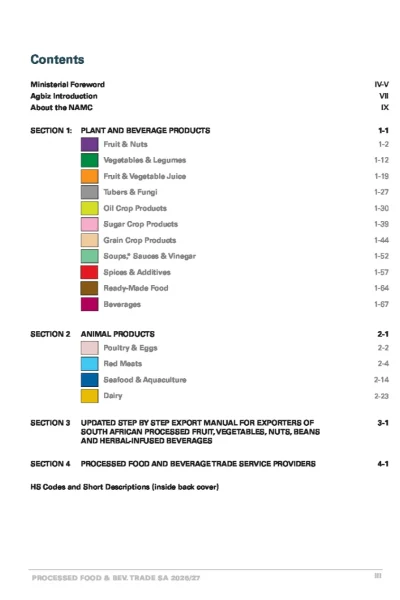
Food and Beverage Trade South Africa is a trade publisher and industry connector supporting buyers and suppliers across the local value chain. The platform operates through annual downloadable PDF publications used as practical reference assets when evaluating Co-Packers South Africa and related suppliers.
Registration supports consideration for future publication inclusion, not website listings.labelling obligations

We respect your privacy, do not tolerate spam and will never sell or give away your personal information to any third party.
We respect your privacy, do not tolerate spam and will never sell or give away your personal information to any third party.
We respect your privacy, do not tolerate spam and will never sell or give away your personal information to any third party.

Register to receive a free download link via your email address.
We respect your privacy, do not tolerate spam and will never sell or give away your personal information to any third party.
Register to receive a free download link via your email address.
We respect your privacy, do not tolerate spam and will never sell or give away your personal information to any third party.
We respect your privacy, do not tolerate spam and will never sell or give away your personal information to any third party.
We respect your privacy and do not tolerate spam and will never sell, rent, lease or give away your information (name, address, email, etc.) to any third party.
Feature now in the online edition and also in the next print edition. After registration you will receive an email with detailed participation options.
We respect your privacy and do not tolerate spam and will never sell, rent, lease or give away your information (name, address, email, etc.) to any third party.
We respect your privacy, do not tolerate spam and will never sell or give away your personal information to any third party.