
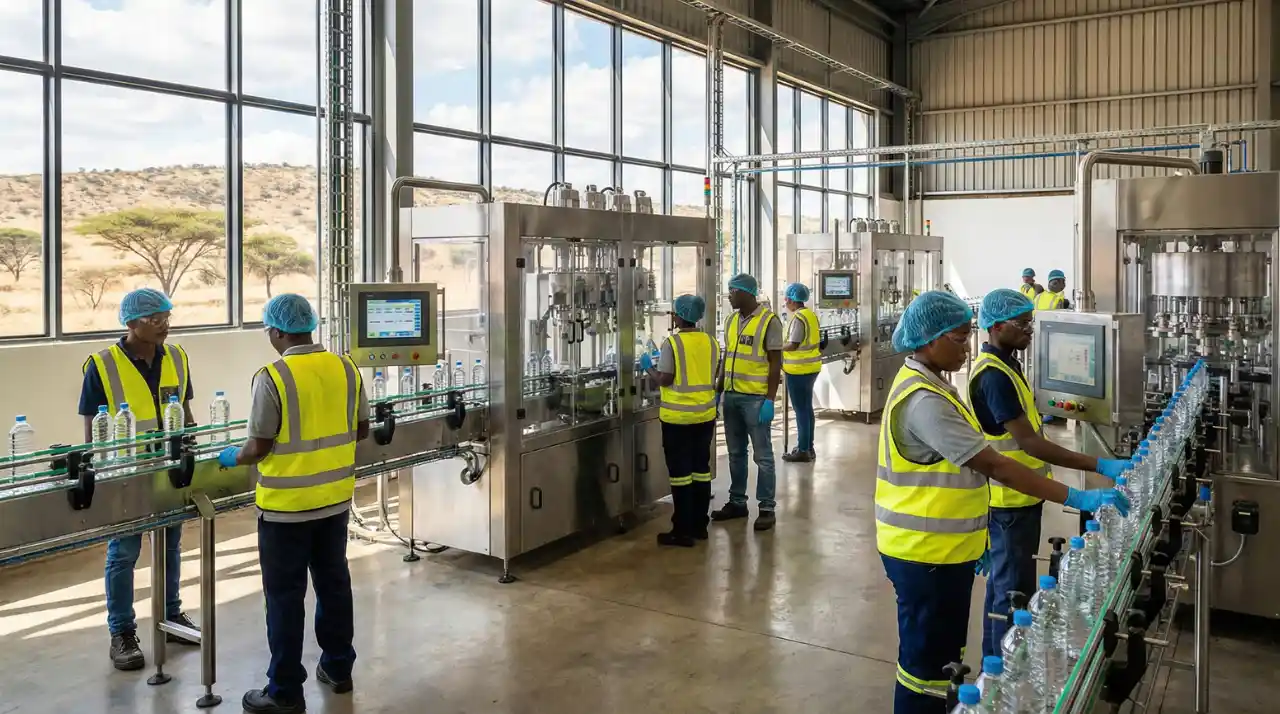
Beverage Manufacturing Companies: Leaders, Trends & How to Choose a Co-Packer
Introduction: beverage manufacturing companies in South Africa
Across South Africa, beverage manufacturing companies are answering demand for everything from bottled water and carbonated soft drinks to energy drinks, juices, RTD teas, dairy blends, and alcoholic beverages. The wider food and beverage manufacturing segment is one of the largest contributors to local manufacturing, with food and beverages together accounting for just over a fifth of total manufacturing output and beverages contributing roughly a third of that division’s production value. This means beverage manufacturers carry real weight in terms of jobs, GDP, and export potential, especially as consumer tastes shift towards functional, premium, and convenience products. For procurement managers, importers, distributors and retailers, understanding this ecosystem is essential when selecting reliable suppliers that can grow with demand instead of running out of steam when volumes ramp up.
At the same time, beverage manufacturing companies are operating in a market that is both competitive and opportunity-rich. Recent analysis of the South African beverages market points to a value of around USD 19 billion in 2023, with solid growth expected through to 2028 as population growth, urbanisation, and rising middle incomes boost demand. Producers are investing in efficiency, energy, and water savings, and smarter production lines just to stay in the game. For many brand owners and private label buyers, this raises a simple question that feels very South African in nature: rather than “maak ’n plan” alone, is it better to plug into established beverage manufacturing companies and co-packers that already have the lines, people, and certifications in place.
TL;DR: Key takeaways
- Beverage manufacturing companies in South Africa sit at the heart of the country’s fast-growing food and beverage sector, supplying retailers, wholesalers, foodservice, and export markets across the continent.
- These beverage manufacturing companies are increasingly using beverage contract manufacturing and specialist beverage co-packers to scale, manage costs, and reduce risk without having to build new plants from scratch.
- Choosing the right drink manufacturing companies and co-packers means checking capacity, certifications, route-to-market support, and understanding how the partner fits into long-term brand strategy rather than just looking at price.
Bigger picture: where beverage manufacturing companies fit in
South Africa’s agro-processing sector, which includes the beverage industry, is recognised by policymakers as a key driver of inclusive growth, exports, and employment. Government strategy documents and sector reports consistently highlight agro-processing as a priority, particularly because value-add in food and beverages multiplies opportunities up and down the supply chain, from farming and ingredient supply right through to logistics and packaging.
Beverage manufacturing companies translate agricultural inputs such as fruit, grains, sugar, plant extracts, and dairy into finished products with higher margins and longer shelf life. This creates space for innovation in flavours, packaging formats, pack sizes, and niche product ranges that serve different income segments and export markets.
Industry advisory resources, such as the Agribook Digital overview of agro-processing, underline how beverages form a substantial share of the national food and beverages manufacturing division. The growth of the beverages segment is supported by rising demand for premium soft drinks, craft-style alcohol, no- and low-alcohol options, and health-forward functional beverages. For supply chain professionals, this means there is no shortage of beverage manufacturing companies vying for attention.
The differentiator is no longer just who can fill a bottle or can, but who can offer quality, compliance, flexibility and route-to-market support that keeps pallets moving, even when loads, ports or global logistics issues put pressure on the system.
Beverage contract manufacturing in South Africa
As competition increases, many beverage manufacturing companies offer beverage contract manufacturing services, where they produce and often package beverages for brand owners and private labels. In global terminology, this is often referred to as co-manufacturing or co-packing, where a specialist facility manufactures and sometimes packages products on behalf of brand owners using agreed recipes, ingredients and specifications.
For South African businesses, this model can be a real game-changer because it allows new or expanding brands to launch or scale without building their own plant, which usually involves major capital expenditure, long lead times, and ongoing compliance and maintenance costs. Instead, the brand focuses on product positioning, sales and marketing, while the beverage contract manufacturing partner focuses on efficient, compliant production.
Well structured beverage contract manufacturing agreements typically cover product formulation responsibilities, ingredient sourcing options, batch sizes, quality assurance, food safety standards, certifications, lead times and volume flexibility. External guides to beverage co-packing and contract manufacturing emphasise benefits such as cost savings, faster time to market and access to specialist equipment and skills that would be too expensive to install in-house.
This is especially valuable when demand is uncertain or seasonal, or when brands need to launch limited runs to test new concepts before committing to full-scale production. In the South African context, where power, water, and logistics can sometimes be unpredictable, working with experienced beverage manufacturing companies that offer contract manufacturing and understand local operating realities can help keep the supply chain steady when things threaten to go pear-shaped.
How beverage co-packers support scaling
Beverage co-packers are a specific type of contract manufacturer or contract packager that focuses strongly on filling, packaging, and labelling, often handling cans, bottles, cartons or pouches at high speeds. In many cases, beverage co-packers can also assist with product development, regulatory labelling checks, packaging material sourcing, warehousing and logistics, which is why international best practice guides highlight co-packers as a way to streamline complex production processes.
In South Africa, beverage co-packers are particularly useful when brands need to manage surges in demand, launch export variants, or trial new pack formats such as sleek cans, multipacks, or PET alternatives without disrupting core SKUs. Supply chain teams value this because a good co-packer can ramp volumes up or down relatively quickly, ensuring the production line keeps up when orders spike rather than leaving shelves empty.
From a risk perspective, partnering with beverage co-packers also diversifies production capacity across multiple facilities, which can be a useful hedge when one site faces interruptions. Co-packers with established food safety systems, recognised certifications, and experienced technical teams can help maintain consistent quality across SKUs, even when recipes or pack formats change.
Many international resources stress the importance of clear communication, robust specifications, and realistic timelines when working with beverage co-packers, since misunderstandings at this level can quickly translate into mislabelled stock or wasted production runs. South African buyers and brand owners who take time upfront to align expectations with their co-packers usually find that the partnership becomes a competitive advantage rather than a headache.
Choosing drink manufacturing companies and partners
When evaluating drink manufacturing companies, decision makers typically look beyond simple per-unit pricing to a broader set of capability and reliability factors. Technical capabilities matter, including the ability to handle different beverage categories such as still, carbonated, dairy-based, or alcoholic products, and to manage multiple packaging formats and sizes. Certifications, food safety culture and track record are equally important, especially where products will be exported or supplied to national retailers with strict compliance requirements.
Skills bodies such as FoodBev Manufacturing SETA play a role in supporting the availability of qualified people in the food and beverages manufacturing sector by promoting relevant training and qualifications.
Strategic alignment is another key factor in choosing drink manufacturing companies. Buyers often prefer partners that understand specific channels, whether that is national retail, independent wholesalers, route-to-market distributors, foodservice operators, or export markets. Operational resilience, including backup power, water treatment, and robust maintenance programmes, becomes critical in an environment where infrastructure can be under pressure.
Finally, digital capabilities such as production data, traceability, batch tracking and automated reporting are becoming more common selection criteria, because they make it easier for brand owners and buyers to meet both regulatory and customer expectations around transparency and sustainability. For many industry players, shortlisting beverage manufacturing companies and co-packers starts with a trusted directory or buyer’s guide that makes it easy to see who does what at a glance.
A manufacturer’s product range is only one part of the decision. Brand owners should also compare production capacity, changeover controls, quality responsibilities, minimum order quantities and the ownership of recipes and finished stock. This practical co-packer selection checklist for South Africa provides a structured way to assess potential partners before requesting trials, negotiating commercial terms or signing a manufacturing agreement.
Benefits of listing beverage manufacturing companies on Food & Beverage Trade South Africa
Visibility in a trusted industry directory
Listing beverage manufacturing companies in a recognised, sector-specific directory immediately improves their visibility among serious buyers, importers, distributors and decision makers. Food & Beverage Trade South Africa fulfils this role by publishing detailed industry guides and eBooks that are already used as reference tools by producers, exporters, logistics providers, and international buyers. These publications group information by sector, region and product type, which makes it much easier for a procurement team or potential partner to find beverage manufacturing companies that match their sourcing brief. Instead of hoping that a buyer stumbles across a website, a listing positions the business directly in front of readers who are actively searching for new suppliers.
The same principle applies to beverage contract manufacturing and beverage co-packers. When these service providers are clearly profiled in a structured directory, brand owners looking for partners can quickly scan capabilities, contact details, and, where applicable, export experience. Connecting through a platform that is already associated with government departments, export control bodies and industry associations enhances credibility, because it signals that the directory is “for the industry, by the industry” rather than a generic listing site. For local manufacturers that are serious about growing share with organised retail, wholesalers, foodservice distributors, and cross-border customers, this type of visibility often opens doors that cold calling would never reach.
Support for processed beverage value chains
For beverage manufacturing companies specifically, the Processed Food & Bev Trade SA directory acts as a specialised map of the processed food and beverage supply chain. The publication highlights manufacturers, brand owners, ingredient suppliers, contract packers, logistics providers and other service companies, which helps buyers understand how different players fit together.
When a beverage contract manufacturing plant or co-packing facility is listed here, it effectively takes a seat at the same table as other established industry role players. That makes it far easier for potential clients to build an end to end supply chain using companies that already speak the same language and operate to comparable standards.
In practice, this can mean a brand owner uses the directory to find a drink manufacturing company capable of handling a specific category such as functional beverages, then uses nearby listings to secure packaging materials, cold chain logistics, and export documentation support. Because the directory sits alongside other sector guides that cover fresh produce and wine, it also supports cross-category sourcing for retailers and distributors that want to consolidate buying.
When teams are under time pressure, having all of this information in one place can be the difference between securing stock ahead of peak season and having to tell customers that deliveries will be late.
Stronger routes to market and export
Another major benefit of listing beverage manufacturing companies on Food & Beverage Trade South Africa is improved access to export and regional trade opportunities. South African beverages already play a growing role in supplying both local consumers and regional markets, and sector pitch decks from investment promotion agencies highlight the scale of the opportunity across Africa and globally.
Buyers from neighbouring countries, and from further afield, often use authoritative directories and buyer’s guides to identify reputable suppliers that can meet regulatory and logistical requirements. A listing acts as a form of pre-qualification, signalling that the manufacturer, co-packer, or contract manufacturer is serious about doing business beyond its immediate backyard.
As trade initiatives such as the African Continental Free Trade Area (AfCFTA) gain traction, cross-border demand for reliable beverage manufacturing companies will only increase. Being present in a directory that is already used by embassies, trade desks and sector associations as a reference tool can help local beverage manufacturers position themselves early, rather than chasing enquiries after competitors have already built relationships.
Over time, this builds more diversified revenue streams for manufacturers, making them less vulnerable to demand dips in any single channel. For buyers, the same listings simplify supplier discovery, allowing teams to compare several potential partners side by side before engaging.
Benefits for both buyers and suppliers
For suppliers, the advantage of listing in a specialised industry directory is clear: more eyes from the right audience on their business, and more opportunities to be contacted for projects, co-packing agreements or private label briefs. For buyers, the benefit lies in risk reduction and efficiency, because they can source beverage manufacturing companies, beverage contract manufacturing partners and beverage co-packers from a pool that has already been partially curated by an industry focused platform.
When both sides use the same reference point, conversations tend to move faster, because each party has a shared baseline understanding of sector standards and expectations. In a market where time really is money, that shared understanding can be worth as much as a new filling line.
Call to action: download one of the latest eBooks
Decision makers who want a clearer view of South Africa’s food and beverage landscape can start by downloading one of Food & Beverage Trade South Africa’s latest eBooks. The titles currently available include Fresh Food Trade SA: South Africa’s fresh food trade and supply chain directory, which profiles fresh fruit, vegetables, and export service providers, the Processed Food & Bev Trade SA supply chain directory, and Wines & Wineries of SA: A visitor’s guide to South African wines and wineries.
These publications are designed for everyday use in sourcing, supplier research, export planning, and market intelligence, and can be shared across teams who need quick access to verified sector contacts. For beverage manufacturing companies, being present in these eBooks is an effective way to stay top of mind when buyers flip through pages looking for new partners.
Readers who are still exploring their options can treat the eBooks as practical roadmaps, using them to understand how beverage manufacturing companies link into fresh produce, processed foods and wine value chains. Over time, these guides function as an informal “who’s who” of the South African food and beverage trade, which is exactly where ambitious manufacturers, co-packers, and drink manufacturing companies want to be seen.
The quickest next step is straightforward: download one of the latest eBooks, flag relevant listings, and start conversations with potential partners. In a sector where opportunities often come from simply being in the right place at the right time, showing up inside these guides is a sensible move.
Platform overview: Food & Beverage Trade South Africa
Food & Beverage Trade South Africa operates as a specialised platform connecting producers, processors, beverage manufacturing companies, service providers, distributors, retailers and exporters. The platform combines a digital presence at foodbevtrade.co.za with annual printed and digital directories that serve as reference tools across the industry. Over more than two decades of publishing, these guides have evolved into comprehensive resources that map South African supply chains from farm and factory right through to port and retail shelf.
Because of this history, the directories are widely used not only by private sector buyers, but also by government agencies, development partners and export promotion bodies looking to showcase local capability.
For beverage manufacturing companies, beverage contract manufacturing operations and beverage co-packers, the platform offers a credible, neutral space in which to present capabilities to a highly targeted audience. The fresh produce directory, Fresh Food Trade SA, highlights South Africa’s strength in fresh exports, while the Processed Food & Bev Trade SA eBook focuses on processed foods and beverages, and Wines & Wineries of SA offers a specialised view of the wine industry and visitor experiences.
Together, these titles provide a joined up view of the broader food and beverage ecosystem, making it easier for local and international stakeholders to see how different categories support one another. Businesses that register to be featured in future editions position themselves as part of this ecosystem, signalling readiness to partner, collaborate, and grow in step with South Africa’s evolving food and beverage trade.


