Before sunrise in the winelands, a small production space hums with routine. Labels get checked, a batch sheet gets signed, and cartons get stacked for a courier that may or may not arrive on time. Between supplier calls, quality checks, and planning the day’s production run, marketing slips down the priority list and becomes reactive. That is how food business marketing mistakes SA brands keep repeating, even when the product itself is excellent, and it is why these mistakes feel so expensive.
TL;DR: Key Takeaways
- Fix the basics first: positioning, packaging signals, and a buyer-ready proof pack.
- Stop guessing: track enquiries, search demand, and repeat orders, not vanity metrics.
- Build one reliable pipeline: Google visibility, a strong website, and consistent follow-up.
- Make compliance and trust easy to verify with simple downloadable assets.
Why digital slip-ups hurt food brands more than most
Food is physical, perishable, and judged fast. Buyers and consumers look for trust signals in seconds, especially when shelf space and menu slots are tight.
A single mistake in messaging or availability can send a prospect straight to a competitor. Many food business marketing mistakes South African suppliers make come from treating food like a generic product category. When these patterns persist, the brand pays twice in wasted sampling and slow follow-up.
The hidden cost of ‘doing marketing’ without a plan
A common pattern plays out across small manufacturers. A website exists, a social page exists, and an occasional promo runs when stock needs to move.
The problem is that activity is not strategy, and marketing mistakes like that create unpredictable demand. Without a plan, food business marketing mistakes keep causing showy work that does not convert. Fixing these mistakes often starts with a simple calendar and one conversion goal.
Mistake: trying to sell to everyone at once
The fastest way to blur a brand is to chase every buyer type. Retail buyers, distributors, foodservice, and direct-to-consumer all need different proof points and trade terms.
When messaging tries to please all of them, none of them feel spoken to. This is one of the most common online marketing mistakes South African food businesses make.
What to do instead
Pick one primary route to market for the next 90 days and build content for it. Use product pages that speak to that buyer’s needs, such as case size, lead time, shelf life, and minimum order quantity. Add a simple ‘who this is for’ line so the right buyer self-selects quickly.
A practical way to anchor this is to link to a buyer shortlist resource like the Food Trade Directory South Africa hub so prospects can explore the ecosystem.
Mistake: confusing brand story with a buyer proposition
A good origin story helps, but buyers shortlist on risk and margin. Procurement teams want to know if supply is stable, documentation exists, and the product will sell.
When a website leads with romance and hides the operational detail, it looks like a hobby. That is why food business marketing mistakes often show up as ‘no response’ after an initial enquiry. Many issues here are messaging issues, not product issues.
What to do instead
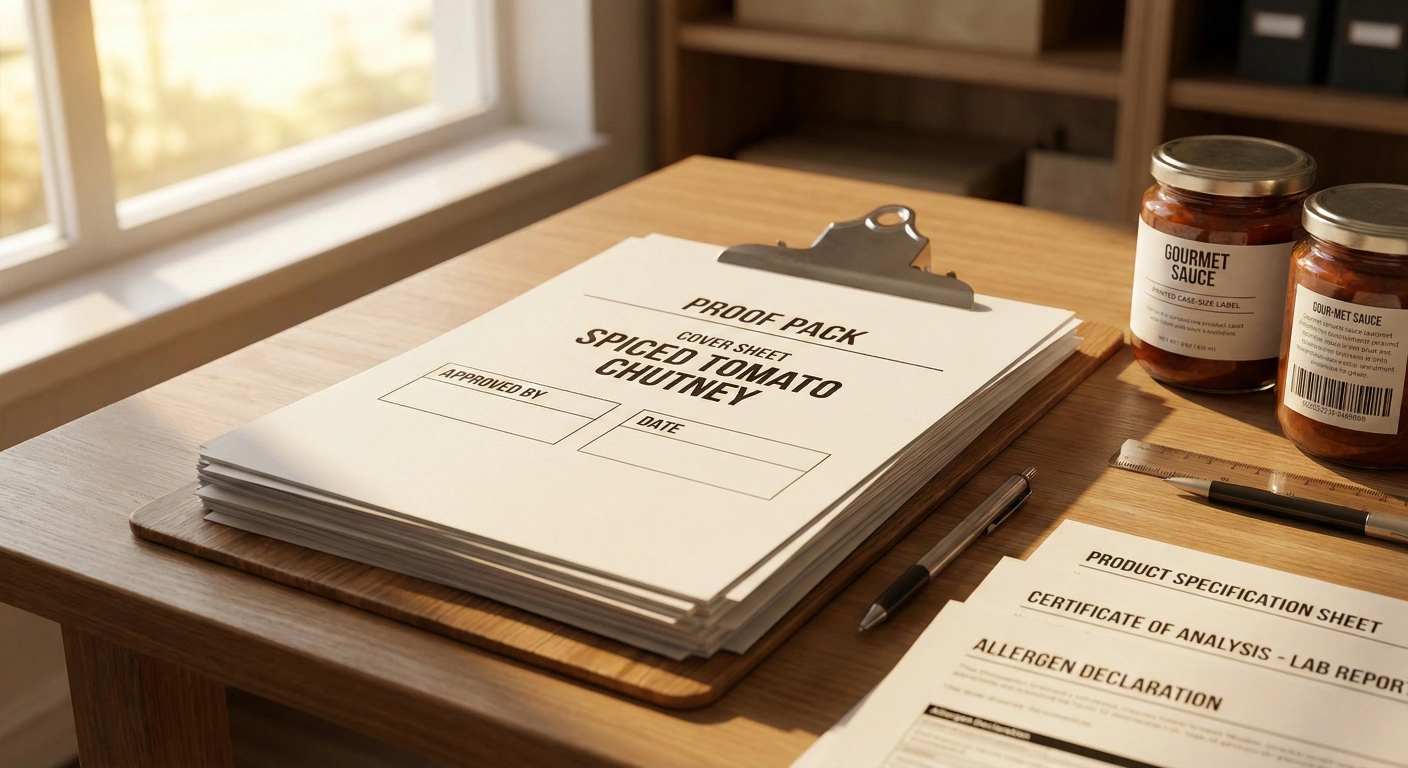
Keep the story, then add a buyer block on every key page. Include certifications, production capacity range, lead times, and distribution footprint. Add one downloadable proof pack that includes a spec sheet, a recent certificate of analysis, and basic allergen and label notes.
This single asset prevents a surprising number of deals from stalling. It’s one of those mistakes teams can avoid early with a simple buyer-first rewrite.
Mistake: using social media as the only ‘website’
Social posts disappear fast, and algorithm changes are not a business plan. A buyer who searches for a supplier at 11 p.m. is not scrolling through last month’s posts. In South Africa, most households access the internet through mobile devices, which makes fast, clear web pages even more important.
Stats SA reports that 72.6% of households could access the internet using mobile technology in 2023. For marketing audits, this mobile-first reality should shape every page template and call to action.
What to do instead
Treat social as distribution, not infrastructure. Put the essential information on a mobile-friendly website with clear product categories, availability, and contact options.
Then repurpose that content into posts and short videos that drive people back to the site. This reduces the mistakes teams make when a platform changes the rules overnight.
Mistake: skipping Google fundamentals and hoping referrals carry the load
Referrals are valuable, but they slow down when the market gets tight. Search demand keeps working while production runs, deliveries, and staff issues take attention.
Many mistakes come from ignoring local SEO, metadata, and indexable product pages. When search visibility is weak, the business pays again and again in outreach, discounting, and ‘specials’ that train customers to wait.
What to do instead
Build a simple SEO hub and spoke structure. Create one strong page for the core category, then publish supporting articles that answer buyer questions.
Use internal links and consistent calls to action to encourage guide downloads and enquiries. Over time, this structure helps prevent recurring mistakes when content gets published randomly. It also reduces digital marketing mistakes when content is posted without a clear search intent.
Mistake: chasing vanity metrics and calling it growth
A post that gets likes can still produce zero sales. A ‘viral’ video can attract the wrong audience and increase admin load. Real growth shows up in qualified enquiries, repeat orders, and distribution wins.
That is why digital marketing mistakes often look successful on the surface but feel stressful in operations.
What to do instead
Set three simple weekly metrics: qualified enquiries, conversion rate from enquiry to order, and time to first response. Track them in a basic spreadsheet so the business can spot trends early.
If tracking is not in place, these mistakes will stay invisible until cash flow feels tight. A quick extra check is to tag every contact form submission with its source, such as Google, LinkedIn, or a directory listing.
Mistake: hiding pricing and trade terms behind ‘contact for details’
Some negotiation is normal, but total opacity creates friction. Buyers want to know if the product sits in the right price band, and distributors want to know margin and deal structure.
When a site offers no guidance, a buyer assumes the business is not trade ready. This is a classic entry on any list of marketing mistakes for SMEs, and it feeds other problems later.
What to do instead
Provide ranges and clear terms so prospects can qualify themselves. Show a recommended retail price range, case size, and minimum order, even if exact trade pricing stays private.
Add a short explanation of how trade pricing works and invite the prospect to request a formal quotation. If speed matters, link buyers to a trade enquiry contact form with a note about typical response times.
Mistake: weak product pages that do not answer the obvious questions
A food product page should do more than show a jar and a flavour name. It should answer the questions a buyer will ask in the first call. Shelf life, storage, allergens, pack format, and availability by region are not optional.
Missing details are one of the common online marketing mistakes South African food businesses make, and it is one of the easiest mistakes to fix in a single afternoon.
What to do instead
Use a standard product page template across the range. Include ingredients, allergens, pack sizes, shelf life guidance, storage instructions, and a short ‘best for’ use case. Add high quality images that show the label clearly and include a photo of the back panel for buyers.
If the brand supplies both retail and foodservice, make the pack formats separate and easy to compare to avoid more confusion.
Mistake: poor trust signals and missing compliance basics
Food buyers are trained to reduce risk. A supplier that cannot quickly show a compliant label, a traceability approach, or basic food safety documentation will be de-prioritised.
The result is not always an explicit rejection; it is silence. This is how mistakes turn into slow growth and wasted sampling. They are often seen as ‘marketing’, but buyers experience them as ‘risk’.
What to do instead
Create a compliance corner on the site that is easy to find from the main menu or footer. Include a simple note on food safety practices, allergen handling, and traceability, written in plain language.
Link to authoritative local guidance, then keep internal documentation available on request. For context and the mobile-first reality, see the Stats SA General Household Survey 2023 internet access tables.
Mistake: publishing content that is ‘nice’ but not searchable
A blog post about a new flavour can be fun, but it rarely matches search intent. Buyers search for practical topics like packaging compliance, shelf life testing, or co-packer selection.
Content that does not map to these questions struggles to rank and does not build authority. This is one of the digital marketing mistakes when content is created without keyword research, and it compounds visibility issues.
What to do instead
Use a keyword cluster approach built around real buyer questions. Choose one pillar topic per month and publish two supporting posts that target long-tail queries.
Keep each piece tied to a conversion action, such as guide downloads or a buyer-ready checklist. If publishing rhythm is a struggle, start with one strong piece and improve it monthly, rather than adding more thin content.
Mistake: inconsistent lead capture and slow follow-up
A food business can lose a deal because a contact form breaks or because a reply takes four days. Buyers work on tight cycles and move on quickly, especially when they are comparing multiple suppliers.
A site without clear forms, simple calls to action, and a fast reply process leaks opportunity. These mistakes are usually operational, not creative, which means they are fixable.
What to do instead
Add a single, consistent lead capture module on key pages. Offer a useful download in exchange for an email and set an auto-response that confirms next steps.
Then aim for a same-day first reply on all enquiries and a 48-hour window for sending a price indication. This reduces the common marketing mistakes when leads go cold.
Mistake: under-investing in the basics because budgets feel tight
It is tempting to wait for ‘more budget’ before fixing the foundations. The reality is that many fixes are about clarity and structure, not spend, and that is good news for SMEs. In South Africa, small businesses play a measurable role in the formal economy, and competition for attention is real.
Stats SA notes that small businesses generated 21% of turnover in the Annual Financial Statistics 2023 series. These mistakes often get blamed on budget, but many improvements cost more attention than money.
What to do instead
Pick the highest impact improvements first: product pages, SEO basics, trust signals, and lead capture. Then iterate monthly based on what the data shows, not what feels urgent that week.
If support is needed, use Food and Beverage Trade South Africa trade insights to guide priorities and templates. For a broader connectivity overview, the ICASA State of the ICT Sector Report (March 2025) provides a useful national snapshot.
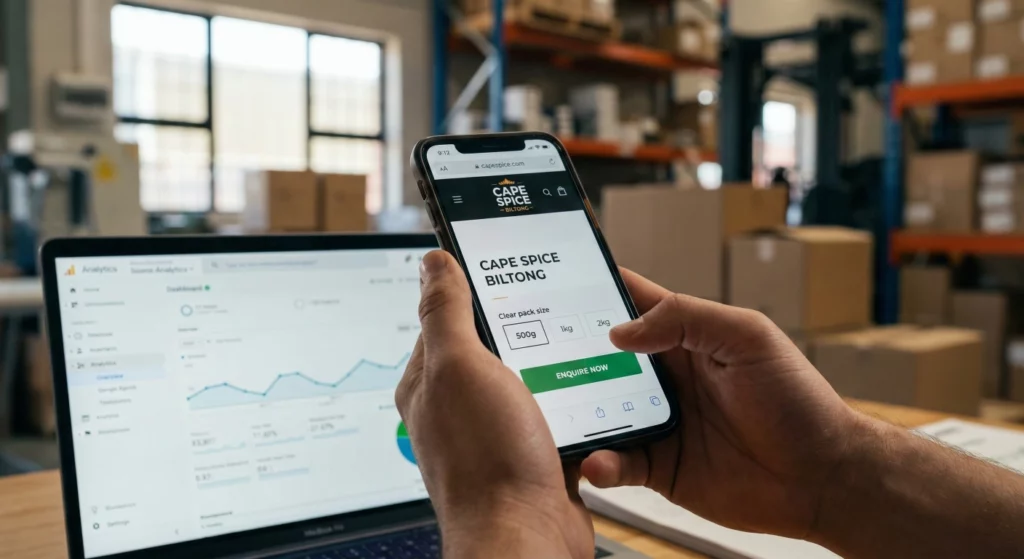
Putting it all together: a 30-day ‘trade-ready’ marketing reset
The goal is not flashy marketing; it is predictable demand and easier shortlisting. Start by choosing a route to market and aligning the website to that buyer’s questions.
Then publish two practical posts that match real search intent and link them back to the main category page. Finally, add a simple offer, such as a guide download, and a clear follow-up process, so teams stop repeating these mistakes.
Week-by-week checklist
Week one: fix the website foundations
Clarify positioning, update product pages, and add proof pack downloads. Ensure mobile speed is acceptable and that contact options are obvious.
Test the enquiry form on a phone and on a slow connection. If listings are a priority, include a next-step link such as registering a business profile for discovery.
Week two: build search visibility
Publish one pillar page and one supporting post. Add internal links and write clear page titles and meta descriptions.
Make sure images have helpful alt text and that each page targets one search intent. This prevents teams from making pages compete with each other.
Week three: create a simple nurture loop
Send a short email that shares the proof pack and a buyer checklist. Keep the tone practical and avoid spammy promises.
Invite replies and questions, then respond quickly with the relevant document. A simple follow-up cadence stops mistakes when leads stay warm but unattended.
Week four: review and refine
Review enquiries, search clicks, and conversion rate. Remove what is not working and double down on what is. Tighten messaging and update the pages that get traffic but do not convert.
This is why these mistakes should be audited quarterly, not only when sales dip.
Conclusion
Most marketing problems in food are not about creativity; they are about clarity, proof, and follow-through. When the basics are solid, buyers can trust what they see and act faster. Avoiding common online marketing mistakes South African operators often repeat is less about doing more, and more about doing the right things consistently. A practical, buyer-ready online presence gives the business a fair shot, even when the market is tough.
FAQ
How can a small food business market online with a limited budget?
Focus on fixing product pages, adding trust signals, and improving Google visibility before spending on ads. A clear offer and fast follow-up typically outperform “more posts”.
Which digital channel matters most for SA food SMEs right now?
Google search plus a mobile-friendly website usually delivers the most consistent intent, especially for wholesale, retail, and foodservice discovery.
What should be included in a buyer-ready proof pack?
A product spec sheet, allergen and ingredient notes, a recent COA where relevant, pack formats, shelf life guidance, and lead time or MOQ expectations.
How often should website content be updated?
Monthly is enough if updates are meaningful: improve top pages, add one strong buyer-focused article, and refine CTAs based on enquiries.
Should pricing be shown on a website when selling trade?
Exact trade pricing can stay private, but ranges, pack sizes, and minimum order expectations reduce friction and improve lead quality.
What is the simplest SEO approach for a food product range?
Create one category hub page, then publish supporting articles targeting long-tail buyer questions. Interlink them consistently using a hub-and-spoke structure.