Introduction
It is just after sunrise, and the factory floor is already moving like a Monday that never ends. A buyer wants “proof of controls”, a distributor wants tighter lead times, and a retailer category manager asks a question that sounds simple but carries real consequences: what certification is in place. In that moment, BRCGS vs FSSC 22000 stops being a nice-to-have discussion and becomes a route-to-market decision.
Table of Contents:
TL;DR: Key Takeaways
- BRCGS vs FSSC 22000 is best decided by buyer channel, not by what looks most impressive.
- BRCGS often fits retailer-led supply chains and private label approval workflows.
- FSSC 22000 South Africa often suits manufacturers who want an ISO-style management system that scales across channels.
- ISO 22000 South Africa can be a solid foundation, but some buyers still push for a GFSI-recognised scheme.
- Strong GMP food manufacturing basics matter more than the logo when audits get tough.
Buyer-channel reality: why the standard question shows up at 5 a.m.
Most SMEs do not wake up dreaming about certification frameworks. The question shows up because buyers use standards to reduce risk and speed up supplier approval. A certificate becomes a shortcut that helps procurement teams compare suppliers without re-auditing every operation from scratch.That is why BRCGS vs FSSC 22000 is rarely about “best in the world”. It is about fit, acceptance, and how quickly a buyer can tick the right boxes and move forward. When the wrong scheme is chosen, the business often pays twice: once for certification, and again in lost time explaining why it should still be accepted.
South Africa baseline first: hygiene law before any logo
Before any certification badge goes on a capability statement, South African food businesses still need to meet local hygiene requirements. This matters because certification audits assume basic hygiene is already controlled and consistently implemented. If the baseline is shaky, certification becomes an expensive way to rediscover basics.
South Africa’s regulations on general hygiene requirements for food premises and the transport of food set minimum expectations for premises, handling, and related controls. A standard is meant to systemise and prove those controls, not replace them. A buyer-ready operation treats legal hygiene compliance as the floor, then uses certification to prove consistency above that floor.
Quick definitions: ISO 22000, FSSC 22000, BRCGS in plain English
ISO 22000 South Africa is a food safety management system standard that helps a business structure hazard control, responsibilities, documentation, and verification. It can be a strong foundation for SMEs that want discipline and repeatability. It is often used to get systems working before aiming for a scheme buyers recognise more widely.
FSSC 22000 South Africa builds on ISO 22000 and adds sector prerequisite programmes and additional scheme requirements. It tends to suit businesses that like ISO-style management structures, internal audits, and continuous improvement rhythms. For many buyers, it is also easier to accept because it is commonly treated as a recognised scheme in global supply chains.BRCGS is widely used in food and ingredient manufacturing, processing, and packing, with strong emphasis on product safety, legality, quality, and operational controls. It often feels more site-and-process intensive, which is why it is frequently seen in retailer-led supply chains. When the conversation is BRCGS vs FSSC 22000, BRCGS is often the standard people associate with retailer checklists and supplier approval clarity.
The BRCGS vs FSSC 22000 question: what is really different?
The biggest practical difference for SMEs is audit style and how requirements show up on the floor. BRCGS vs FSSC 22000 is often experienced as “checklist pressure” versus “management system pressure”. Both demand evidence, but they push teams in slightly different ways.
FSSC tends to reward strong system design, internal auditing, and management review discipline. BRCGS tends to reward strong site standards, visible control, and tight operational discipline across people, process, and premises. A business can succeed with either, but the work feels different in the months leading up to audit day.
Audit style: management-system vs checklist pressure
FSSC 22000 South Africa often works well when the team wants a structured management system that can be integrated across products, shifts, and sites. It can feel more “system-led”, which suits SMEs that want long-term stability rather than short-term audit survival. It also supports step-by-step maturity from HACCP foundations into a recognised scheme.
BRCGS can feel more prescriptive, which can help SMEs that want clear, practical requirements with less interpretation. It reads like a detailed set of expectations that are easy to translate into audits, checklists, and verification records. In the BRCGS vs FSSC 22000 decision, that prescriptive clarity can be a real advantage when a retailer expects specific clause-style evidence.
Site standards and housekeeping expectations
Both routes demand strong prerequisite programmes, but BRCGS often exposes site gaps fast because it pushes hard on factory standards, housekeeping, zoning, and operational controls. If the site is still maturing, that can be painful, but also helpful because it forces the business to fix what buyers notice first. In practice, weak cleaning verification, poor flow, or messy change control can sink audits regardless of scheme.
FSSC also requires strong prerequisites, but SMEs sometimes experience it as easier to sustain when the management system is properly embedded. That said, a weak GMP food manufacturing base will still collapse under scrutiny, especially when staff turnover or production pressure hits. BRCGS vs FSSC 22000 never outruns weak basics.
Supplier approval, packaging control, and change control
Retail and foodservice buyers often focus heavily on supplier approval, incoming controls, packaging risk, and change control. BRCGS has a strong reputation for aligning well to how retailer supply chains think about those controls. It often reduces “explain yourself” moments because the structure matches buyer expectations.
FSSC 22000 South Africa still requires supplier control and risk-based management, but it often frames it in a management-system style. That can be excellent for multi-channel SMEs because it scales across ingredients, packaging, and different product lines without becoming a pile of disconnected checklists. In a mixed-channel world, BRCGS vs FSSC 22000 often comes down to whether the business needs retailer-specific proof now, or scalable systems that hold across multiple buyer types.
ISO 22000 South Africa: when it fits and when it stalls market access
ISO 22000 South Africa can be a smart stepping stone when a business needs structure, training, and a credible system, but is not yet forced into a retailer-specific scheme. It can help lock in hazard control discipline, internal audits, and corrective action habits. For many SMEs, it is the point where food safety stops living in one person’s head and starts living in the operation.
The risk is assuming ISO 22000 automatically unlocks retail. Some procurement teams will ask the next question quickly: is the scheme recognised under the Global Food Safety Initiative. If the buyer’s requirement is a GFSI-recognised scheme, ISO 22000 alone may not clear the hurdle, even if the system is solid.
Which food safety standard do South African retailers prefer?
There is no single universal answer, and that is the honest part that saves time. Many retailers prefer standards they already accept and understand in their supplier approval workflows. In practice, the question “which food safety standard do South African retailers prefer” is often answered with “the one listed in the vendor requirements for that category”.That is why BRCGS vs FSSC 22000 becomes simpler when a target retailer or distributor is clearly defined. If a buyer explicitly accepts one scheme, choosing the other usually creates unnecessary explanation work. SMEs win by picking the scheme that removes friction, not the one that sounds most prestigious.
Choose by buyer channel
If the target is premium retail and private label
If the goal is premium retail listings or private label manufacturing, BRCGS is often the most direct signal because it is commonly used in retailer-led supply chains. The prescriptive requirements also help reduce interpretation and speed up supplier approval conversations. In the BRCGS vs FSSC 22000 decision, this is usually where BRCGS shows its strongest advantage.
The trade-off is the intensity of site standards and day-to-day discipline needed to stay audit-ready. It is not only about paperwork, it is about visible control on the floor. If the operation struggles with housekeeping, flow, or change control, the runway needs to be longer.
If the target is mixed channels and export readiness
If the business supplies multiple channels, or wants an ISO-aligned system that scales over time, FSSC 22000 South Africa can be a strong fit. It supports a management rhythm that can survive growth, staff changes, and product expansion. It is also often a good match when the business wants a clear evolution from HACCP into a recognised certification scheme.
In a mixed-channel reality, BRCGS vs FSSC 22000 often comes down to whether buyer acceptance is retailer-specific today, or broader and more system-driven across channels. FSSC can be a flexible anchor when the channel mix is expected to change over the next 12 to 24 months. That flexibility can save real money in rework.
If the target is wholesale, regional distribution, or early-stage growth
For some SMEs, ISO 22000 South Africa is a practical milestone that builds discipline without taking on the full load of a retailer-heavy scheme too early. It can improve internal control, traceability readiness, and corrective action habits quickly. It also creates a foundation that makes later upgrades less chaotic.The caution is timing. If retail is a near-term target, an ISO-first approach can slow market access if the buyer wants a specific scheme. In the BRCGS vs FSSC 22000 conversation, ISO 22000 is often best treated as a foundation step, not the finish line.
Non-negotiables across all standards
GMP food manufacturing foundations that must be real
Auditors and buyers quickly spot when GMP is “paper good” but operationally weak. Cleaning verification, chemical control, pest prevention, calibration, and maintenance discipline must hold during busy weeks. If the operation only looks good when visitors arrive, the audit will catch it.
A strong GMP food manufacturing baseline also reduces audit fatigue. Instead of fighting twenty basic findings, the team can focus on higher-value controls like validation, risk-based verification, and continuous improvement. That is where certification becomes a business asset, not a stress cycle.
Traceability and recall readiness buyers check first
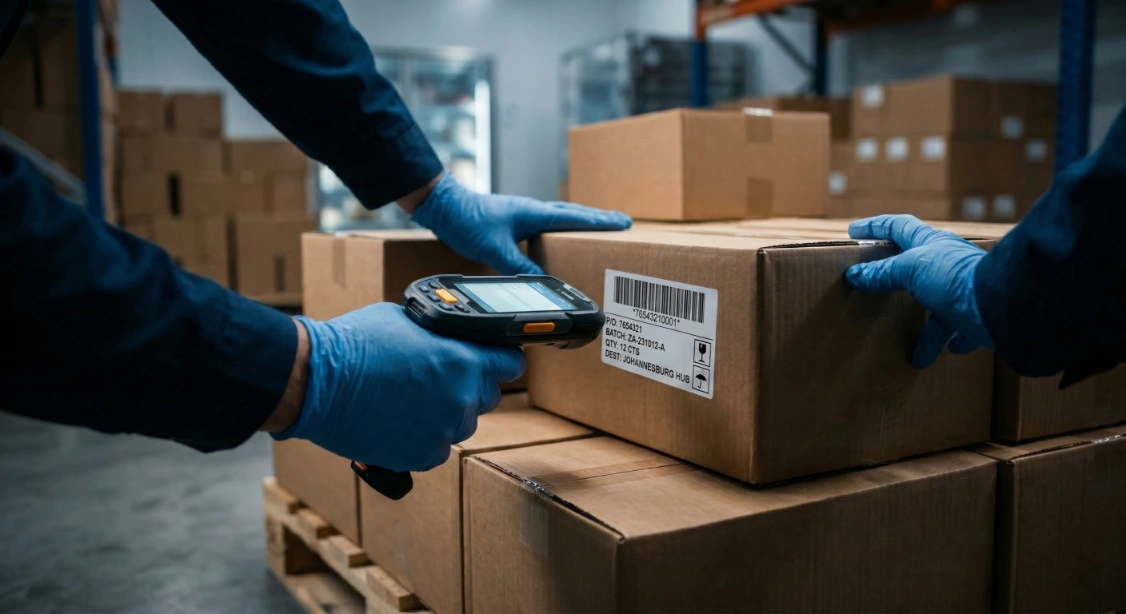
Buyers want confidence that a batch can be traced quickly, and that a recall would be controlled and calm. That means batch coding, controlled release, supplier records, and mock recall tests that actually happen. A plan that is never tested is not a plan, it is stationery.
Traceability also links directly to procurement trust. When a supplier can pull records fast, it signals operational maturity. That maturity often matters as much as the certificate itself.
Allergen control and label control that survive busy weeks
Allergen control and label control fail most often during changeovers, rush runs, and new packaging. That is why auditors focus on label sign-off, version control, segregation, and verification checks. Even artisanal brands get assessed like commercial suppliers once listings scale.
When labelling and allergen controls are stable, buyer onboarding becomes easier. It also reduces costly rework and rejected deliveries. For SMEs, that stability is a competitive advantage.
Costs and timelines for SMEs without losing the plot
Certification costs are not only the audit fee. The real cost includes system build time, staff training, corrective actions, and the time taken away from production. SMEs benefit from treating certification as an operational improvement programme, with weekly evidence targets and clear owners.A realistic sequence usually includes a gap assessment, system build, internal audits, and time to close nonconformances. The fastest certifications are often the ones with fewer surprises because GMP food manufacturing basics were already stable. In BRCGS vs FSSC 22000, the quickest win is choosing a scheme that matches the buyer channel so the work is not duplicated.
Practical rollout plan: 6 steps that reduce rework
Start by mapping product and process risks, including allergens, packaging risks, and key equipment failure points. Then build prerequisite programmes people can follow without supervision, because consistency is the real test. After that, align hazard controls to the actual process, not the ideal process.
Next, run internal audits like practice matches, not punishment. Fix repeat issues first, because repeat issues are what auditors and buyers interpret as weak control. Then choose the scheme that matches the buyer channel and build an evidence pack that fits that scheme’s expectations.
Finally, keep the buyer story clear: specifications, COAs, lead times, and contact points should be easy to find. A system that cannot be explained clearly often cannot be trusted quickly. That is the quiet difference between being “compliant” and being “buyer-ready”.
Where to speed up buyer trust and shortlisting (without over-selling)
Certification works best when buyers can also understand the supplier offer quickly. A useful place to start is the Food and Beverage Trade South Africa platform for supplier discovery and buyer-ready guidance. The quickest win is often improving how proof is packaged, not only how audits are passed.Use the platform’s supplier discovery hub to support shortlist-driven procurement via the Food Trade SA supplier directory hub. If outsourcing is part of the model, align credibility and capability by referencing the co-packers and contract manufacturing hub. For ongoing market and compliance context, keep visibility steady through the trade insights and news section.
Conclusion
The best standard is the one that removes friction in the buyer channel being targeted. The BRCGS vs FSSC 22000 decision becomes clearer when the channel is defined, the GMP food manufacturing basics are stable, and the team has a repeatable evidence pack. With the right scheme choice and a practical rollout plan, certification becomes less about a badge and more about reliable listings, smoother audits, and stronger long-term trade relationships.
FAQ
Which food safety standard do South African retailers prefer?
Retailers typically prefer schemes they already accept in their vendor requirements, often GFSI-recognised. The safest approach is to confirm acceptance per retailer and category, then choose accordingly.
Is ISO 22000 South Africa enough to supply major retailers?
Sometimes, but many retailers and large distributors ask for a specific recognised scheme. If retail is a near-term goal, confirm requirements early to avoid rework.
Is FSSC 22000 South Africa better than BRCGS?
Not universally. BRCGS vs FSSC 22000 is about fit: BRCGS often aligns strongly to retailer-led checklists, while FSSC often suits ISO-style systems across multiple channels.
How long does certification take for an SME?
It depends on readiness. Most SMEs need time for a gap assessment, system build, internal audits, and closing findings before certification audit day.
What causes first audits to go badly?
Weak site standards, inconsistent evidence, and controls that break under pressure are common. Auditors test whether the system works in busy weeks, not only in neat files
Do buyers accept HACCP without certification?
Some do at smaller volumes, but many buyers require third-party certification as volumes and risk increase. HACCP is often treated as a foundation step.