Introduction: a dawn start and a tight delivery window
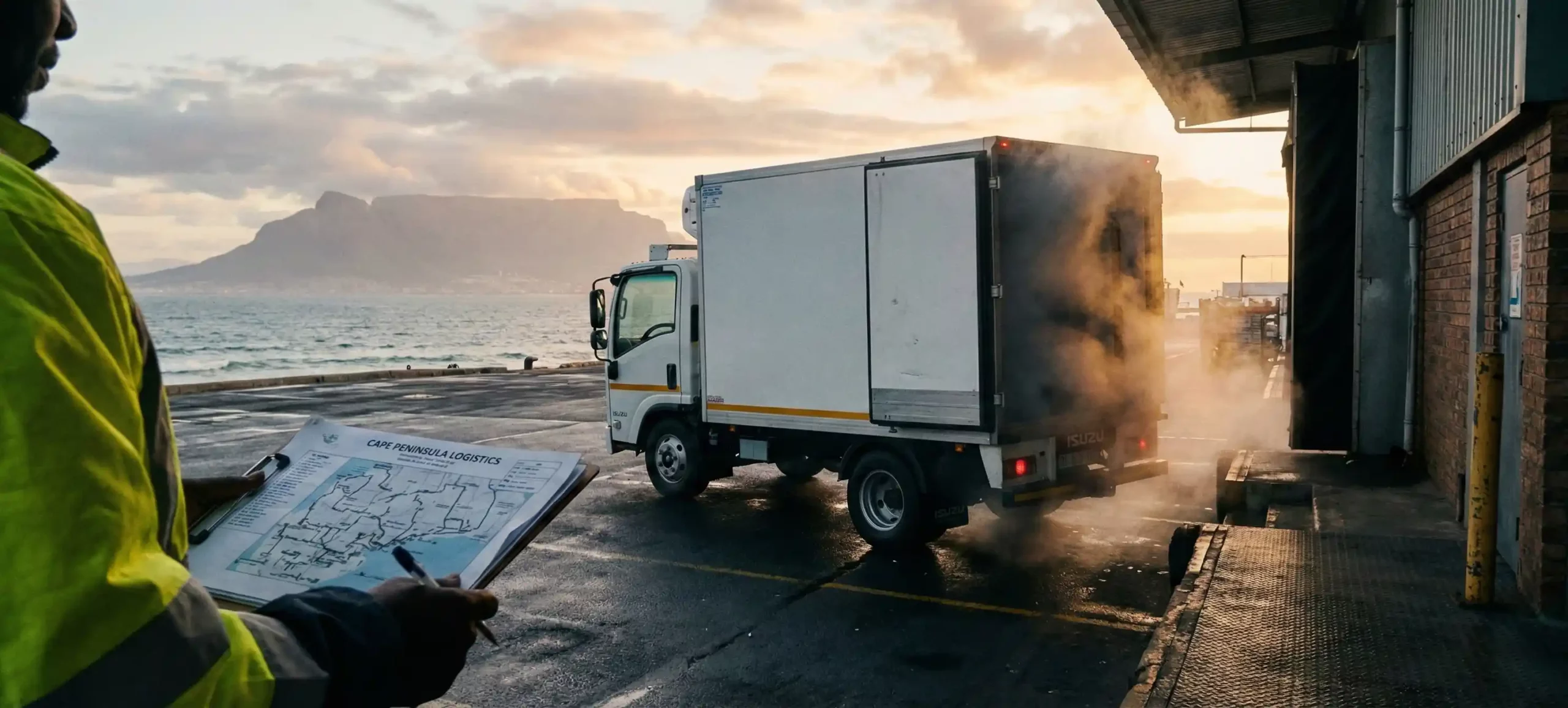
Before sunrise in the winelands, a founder steps into a neat production space while a small team finishes labelling jars of premium sauces. The air is cool, a faint hum comes from the chiller, and the first delivery window into Cape Town is less than two hours away. A bakkie is loaded, route notes are clipped to a clipboard, and the receiving clerk at a hotel kitchen expects the first drop before the breakfast rush. In this rhythm, food transport logistics SA is the thread that holds product integrity, buyer expectations, and cash flow together when margins feel as thin as a roti.
Table of Contents:
TL;DR: Key Takeaways
- Treat food transport logistics SA as a system of promises that link production planning, cold chain tips, and realistic delivery windows.
- Build local delivery networks with clear cut-offs, transparent fuel cost saving rules, and handover discipline that includes temperature checks.
- Lock in compliance under R638, keep a valid Certificate of Acceptability, and ask partners for proof of vehicle hygiene and temperature logging.
- Stage growth into coastal cities with short last-mile hops from affordable cross-docks and insist on simple SLAs with measurable temperature points.
Why food transport logistics SA determines SME profitability
For small producers and distributors, transport is usually the largest lever after raw inputs and labour. A poorly sequenced route, an over-ambitious schedule, or a missed temperature check can erase a week of hard work.
Buyers in hospitality and retail remember on-time, in-spec deliveries, and that memory translates into repeat orders over many months. The chain is only as strong as the most rushed handover, which is why food transport logistics SA rewards patient planning and calm routines rather than late adjustments.
The South African context that shapes everyday choices
South Africa’s price environment influences every delivery plan, especially for fuel-sensitive schedules. Recent data shows headline inflation easing, which changes the tone of price and surcharge conversations with buyers.
Statistics South Africa reported that annual consumer price inflation pulled back in August 2025, easing to 3,3 percent from 3,5 percent in July, with softer food and fuel inflation taking heat off the headline rate. This creates room to reset base rates and align surcharge formulas to public data that everyone can verify.
Food baskets show the same cooling pattern.
Independent analysis notes that year-on-year inflation on food and non alcoholic beverages decreased from 5,7 percent in July 2025 to 5,2 percent in August 2025, which helps to keep freight markups stable when negotiating annual deals. A steadier basket supports food transport logistics SA because fuel and food often move together in buyer conversations.
Fuel still moves monthly and can unsettle budgets if there is no agreed formula. The Department of Mineral and Petroleum Resources confirmed adjustments effective 3 December 2025, including specific cents per litre changes and regulated margin updates. Pegging surcharges to the department’s monthly statements helps remove surprises and keeps the maths simple for finance teams on both sides.
Longer-term network reform also matters. The national freight logistics roadmap aims to reduce logistics costs and encourage a gradual shift to rail for appropriate flows, a direction reinforced by announcements to open freight rail slots to private operators. This is not an overnight fix, yet it signals where corridor reliability could improve in future.
Cold chain basics explained plainly
Perishables do not forgive guesswork. Food transport logistics SA starts with validated set points, calibrated probes, and a written sequence that covers loading, transit, and handover. Vehicles should be pre cooled before loading, pallets should be staged to minimise door open time, and probe readings should be recorded at dispatch and delivery.
Handover is a control point where delays often happen, so receiving-bay waits and gate-pass procedures need realistic buffers to avoid temperature drift that is hard to defend later.
Temperature control, monitoring, and clean handovers
Build the route around the most temperature-sensitive product and the tightest delivery window. Keep a rule that no one signs without a temperature reading and a quick visual check of seals or tamper tags.
Photograph readings with time stamps for high-risk lines so disputes do not become credit notes after the fact. Cold chain tips work best when discipline is visible, repeatable, and trained into the team so that new staff follow the same routine from day one.
Low-cost tech that pays for itself
USB data loggers and Bluetooth probes make continuous monitoring realistic on SME budgets. Pair devices with route-planning apps that reduce idling and door open minutes, and keep a simple spreadsheet that flags hotspots for coaching.
Ten minutes of weekly driver coaching is usually worth more than chasing another small discount on diesel. Food transport logistics SA thrives on small wins that compound through the year.
Local delivery networks that match real roads and receivers
South African metros and towns have distinct traffic rhythms that can derail a perfect plan on paper. Township shops may receive stock early, CBD sites crowd later in the morning, and industrial parks often have long security queues at shift change.
Food transport logistics SA needs a delivery map that respects these human patterns rather than an ideal sequence lifted from a generic route optimiser. Trust grows when cut-offs are published, explained, and then honoured repeatedly.
Township to CBD to coastal corridor planning
Start where congestion will be worst and cluster dense stops together. Leave the single distant drop for an off peak window when the road is clearer, and the reefer has worked less.
Share cut-offs with buyers and link them to routing logic so everyone understands why the rule exists. Short written rationales prevent arguments and reduce last-minute changes that create the most temperature drift.
Fuel cost saving that protects engines and integrity
Diesel is the swing factor in many delivery budgets. Regional freight modelling for the Western Cape shows that in 2023 fuel accounted for 40,7 percent of the total road freight transport cost, with maintenance and driver wages far behind.
This picture explains why gentle driving, tyre pressure checks, and balanced loading matter as much as a sharp deal at the pump. Food transport logistics SA is won by disciplined driving and practical maintenance, not only by unit price alone.
Driver behaviour, tyres, and load planning
The cheapest litre is the one not burned. Smooth acceleration, fewer hard brakes, and consistent speeds save fuel without adding delivery time when routes are realistic. Tyre pressure matters because under-inflation increases rolling resistance and raises temperatures in both tyres and chillers.
Balanced loads reduce strain on the reefer and shorten cool-down times after handovers. A modest telematics view that highlights idling hotspots gives a fair way to coach behaviour without naming and shaming.
Paperwork that prevents stoppages
Administration feels like a grudge purchase until a vehicle is stopped or a receiving bay refuses entry. The regulations governing general hygiene requirements for food premises apply to the transport of food and are explicit that vehicles used to move perishable foods must comply.
A valid Certificate of Acceptability is non-negotiable and should be visible and current. Asking partners for copies of certificates and cleaning schedules is normal risk management rather than an optional extra.
Certificate of Acceptability and vehicle standards
Keep copies of the CoA on site, in the cab, and in a shared folder so that sales and logistics can respond quickly to buyer queries. Check that the vehicle interior is smooth, cleanable, and free of damage that traps bacteria. Inspect gaskets, hinges, and door seals as part of weekly maintenance so doors close quickly without gaps that leak cold air.
Food transport logistics SA works because a chain of small controls is documented and auditable without drama.
When to consider transport and storage certification
Industry schemes for transport and storage provide a way to demonstrate maturity to national buyers and export partners. These frameworks focus on temperature integrity, hygiene standards, and traceability across loading, transit, and off loading.
The choice is commercial and should be timed to match revenue opportunities, yet it can shorten supplier onboarding with risk averse customers who want documented controls.
Load shedding survival for cold goods
Power interruptions are a routine constraint in many districts. Large retailers have disclosed sizeable diesel spend to keep stores trading during blackouts, which illustrates the real cost of keeping cold chains functioning.
For small fleets and depots, the most effective plan is to prioritise the highest risk products and size back up power for short windows that prevent write offs rather than attempting full day coverage. Food transport logistics SA benefits when back up plans and handover discipline are paired on high risk days.
Practical backup power maths
Map the kilowatts required to hold temperature for the most sensitive lines and aim for two to four hour buffers. Confirm the status of receiving bays during outages to avoid arriving at a dark site where handovers cannot be completed.
Add a small margin in schedules on risky days and communicate early with buyers about the plan. Predictability often matters more than raw speed when the grid is unstable.
Multimodal moves and the rail picture
Most SME loads will stay on road, but policy signals matter for long corridor flows. The national roadmap and recent steps to open freight rail network access to private firms point to gradual improvements on selected routes.
When trunk capacity becomes more reliable, some operations can consider hybrid road rail staging for non urgent inputs, which may free up road vehicles for time sensitive last mile drops. Timing and proof of service are the key filters.
What to watch as rail reforms roll out
Watch for third party access on specific corridors, published performance metrics, and transparent slot allocation. Ask carriers how they will use new slots and what contingencies exist if a contracted train is delayed.
Opportunities emerge when volumes are predictable and service is repeatable, not when promises outpace operational reality. Evidence of actual access and movement should guide lane design and pricing conversations.
Growing beyond one province
Scaling into Cape Town and Durban works best with staging near logistics hubs and short last mile hops into dense areas. Use cross docking only when it genuinely shortens routes and protects temperatures, and specify probe readings at both entry and exit from any third party facility.
Food transport logistics SA rewards operators who keep steady routines when entering new cities with unfamiliar traffic rhythms.
Staging, cross docking, and partner SLAs
Choose partners who can demonstrate experience with perishable products and who understand R638 expectations. Write SLAs that specify handover checkpoints, recording requirements, and responsibility for disputes.
Visit facilities before signing and request sample logs from the last thirty days to see real behaviour rather than promises. A week spent selecting the right partner is cheaper than months of patching avoidable quality issues.
Pricing, surcharges, and honest conversations
A predictable surcharge model is kinder to both sides than a surprise line item. Peg fuel levies to the department’s monthly statement and agree on the day of the month when the recalculation happens. Publish the base month so anyone can confirm the maths independently.
Add a small fixed fee that covers continuous logging and probe checks so cold chain costs are not argued on every invoice. Food transport logistics SA is as much about trust as it is about kilometres and litres.
Simple documentation builds trust
Share the surcharge formula with new buyers and provide a one page explainer that lists the sources used. Keep copies of statements on file and attach a short note when a change triggers a rate adjustment. Invite questions and be willing to walk through examples with procurement teams.
When documents are simple and consistent, approvals are faster, and relationships grow on the back of fewer surprises.
Tools, communities, and where to find partners
No small operator should feel isolated. Food and Beverage Trade South Africa curates directories, insights, and industry connections tailored to the sector. Start with a shortlist of cold chain partners, cross docks, and regulatory advisors, and filter by province and product type to reduce trial and error.
More to explore include the Food and Beverage Trade South Africa home page and the Food and Beverage Trade South Africa blog.
Conclusion: steady habits win the long game
Transport and logistics do not need to be glamorous to be effective. The standouts sequence routes realistically, treat the cold chain like gold, and keep documents that prove control without fuss. Food transport logistics SA rewards daily habits that make deliveries boring in the best possible way. Over time, that steady reputation opens doors that glossy brochures cannot.
FAQ
How should an SME set a fair fuel surcharge that buyers accept?
Anchor the levy to the monthly fuel-price statement from the department and recalc on a fixed day each month. Share the baseline month and keep statements on file so anyone can check the numbers. This approach makes food transport logistics SA pricing predictable and reduces invoice disputes.
What cold chain proof do buyers actually trust at handover?
Two probe readings, a seal check, and a continuous logger trace settle most disputes. For high risk lines, include date-stamped photos of probe screens. Consistency across routes builds confidence faster than any technical brochure.
Is a Certificate of Acceptability really necessary for transporters?
Yes. The regulations governing general hygiene requirements for food premises apply to transport and explicitly reference vehicles moving perishables. Keep a valid CoA and ensure vehicles meet hygiene and materials standards.
Will rail changes lower costs for small distributors in the short term?
Road remains primary for most SME flows, but the roadmap and new access for private operators indicate corridor improvements over time. Track progress on specific routes and ask carriers for evidence of slot access before planning multimodal changes.
What is the quickest way to cut diesel use without slowing deliveries?
Coach smooth driving, reduce idling, and maintain correct tyre pressure. Balance loads to reduce strain on chillers, and design routes that avoid backtracking. These habits compound over weeks and support food transport logistics SA by protecting both fuel and temperature integrity.
How should staging work when expanding beyond one province?
Stage near logistics hubs and run short last mile hops into dense areas. Cross dock only when it cuts distance and protects temperatures, and insist on probe readings at both in and out. Clear SLAs with measurement points avoid long disputes later.