Introduction
It is still dark when the first messages start arriving: a tasting-room booking, a distributor asking about stock, and a tourism partner wanting confirmation for a bus arrival. In the Western Cape, that mix of hospitality and commerce is normal, but it gets louder when a headline event is on the calendar. Cape Wine Auction 2026 is one of those moments where wine tourism and trade partnerships cross paths in the same room.
For small producers and service partners, Cape Wine Auction 2026 is not only a social day out. It is a practical chance to be seen, to learn what premium buyers respond to, and to strengthen relationships that lead to repeat business. The difference comes down to approach: treat Cape Wine Auction 2026 like a trade meeting with a warm atmosphere, not like a random function.
This guide breaks down what Cape Wine Auction 2026 is, what happens on the day, and how to use it to support wine tourism Stellenbosch growth and smarter wine routes Western Cape planning. It also maps out what to prepare so that South African wineries and adjacent partners leave with next steps, not just photos. The goal is simple: less guessing, more follow-through, and partnerships that last beyond February.
Table of Contents:
TL;DR: Key Takeaways
- Cape Wine Auction 2026 works best as a relationship and visibility accelerator, not a once-off outing.
- A basic meeting plan turns wine tourism Stellenbosch chats into follow-ups and referrals.
- Buyer-ready info makes South African wineries and partners easier to shortlist.
- A 72-hour follow-up workflow keeps momentum moving across wine routes Western Cape.
Cape Wine Auction 2026 in Plain Terms
Cape Wine Auction 2026 is a curated auction and experience day hosted in the Winelands, designed around premium wine, hospitality, and fundraising. The format typically brings together producers, tourism operators, and supporters who value the region and its people. That mix matters because it creates a rare environment where consumer-facing and trade-facing conversations happen naturally.
South African wineries that rely on tasting-room revenue, direct-to-consumer sales, or on-trade placements can benefit from attending. So can boutique accommodation operators, tour companies, event suppliers, and premium food producers who pair well with wine experiences. For SMEs, the real value is the network density, where one introduction can lead to multiple downstream partnerships.
The long-tail question, what is the Cape Wine Auction and who should attend, has a practical answer. Any business building premium relationships in the Cape Winelands should consider it, especially where referrals and repeat visits drive revenue. When approached with intent, Cape Wine Auction 2026 becomes a shortcut to trust.
Date, Venue, and What Actually Happens on the Day
Cape Wine Auction 2026 takes place on 7 February 2026 at Nederburg Wines in Paarl, as listed in the organiser’s official ticket details. The venue matters because it influences travel plans, shuttle partnerships, and how easily meetings can be stacked. Paarl also makes it easier to link the day to wider wine routes Western Cape itineraries.
For planning, it helps to treat the day in three blocks. Block one is arrival and orientation, where the objective is to settle logistics and spot the people worth meeting. Block two is the highest-value networking window, where quick conversations become planned follow-ups. Block three starts before the drive home, where notes are captured and next steps are assigned.
A useful rule is to avoid drifting with the crowd. The day is designed to be enjoyable, but business value comes from choosing moments for conversation on purpose. That is where Cape Wine Auction 2026 shifts from “nice event” to “commercial tool”.
Why This Event Matters for Wine Tourism and Trade Partnerships
Wine tourism is not only about foot traffic. It is about conversion, retention, and reputation, and those are the same three levers that matter in trade partnerships. Cape Wine Auction 2026 sits in the overlap: visitors want memorable experiences, while trade partners want reliability and clarity.
That overlap creates practical opportunities. A tourism operator can pair a cellar-door visit with a producer story that increases perceived value. A winery can turn a once-off guest into a repeat buyer through a club, a mailing list, or a planned return visit. A distributor can spot producers with strong narratives and consistent operations, then explore a small-batch route to market.
Wine tourism is not only about foot traffic or scenic tasting rooms. It has become a meaningful economic engine for the broader wine sector. According to research from the industry body South Africa’s wine tourism sector contributes significantly to the national economy, generating billions of rand in economic activity while supporting employment across wineries, hospitality businesses, and tourism services.
This wider ecosystem is exactly what events like Cape Wine Auction 2026 bring together in one place, creating opportunities for producers, tourism operators, and trade partners to build relationships that support both visitor experiences and long-term commercial growth.
The point is not to do everything at once. The point is to use Cape Wine Auction 2026 to open one or two doors that are hard to open through cold outreach. When those doors open, the rest becomes process.
The Biggest Opportunity SMEs Miss at Prestige Events
Many SMEs attend prestige events and leave with business cards, but no action. The issue is rarely effort; it is usually a missing system. Without a simple plan, the day becomes reactive, and the strongest connections drift away once Monday arrives.
A better approach is to set a single business outcome before the event. For example: secure three tourism partners, identify two on-trade buyers, or agree on one cross-promotion with another winery. When that outcome is clear, it becomes easier to choose who to meet and what to say.
Cape Wine Auction 2026 rewards that kind of focus because the setting makes conversations easy. The job is to make sure those conversations become commitments. That is how Cape Wine Auction 2026 turns into real momentum.
Wine Tourism Stellenbosch: Turning Visitor Demand into Partner Demand
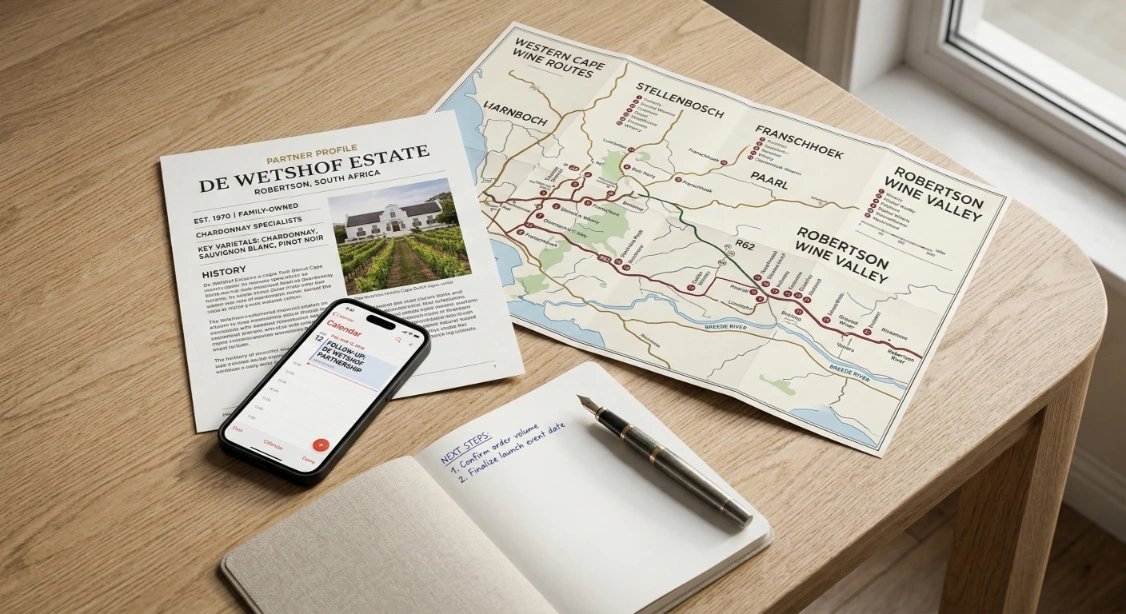
Wine tourism Stellenbosch is often framed as a visitor story, but it is also a partner story. When tourists show up consistently, downstream partners show up too: accommodation, transport, guides, restaurants, and event teams. That creates a network effect, but only if partnerships are managed deliberately.
A simple way to think about it is this: visitor experience is the product, and partnerships are the supply chain. If one part fails, the experience degrades, and the referral loop weakens. Cape Wine Auction 2026 is a useful moment to strengthen that supply chain through introductions and shared planning.
For wineries marketing into Stellenbosch, alignment with tour operators matters more than most people expect. Timing, group size, cancellation policies, and upsell options look small, but they determine whether a partner promotes a venue confidently. When those basics are solid, wine tourism Stellenbosch grows with less friction.
Wine Routes Western Cape: Why Routes Shape Buying Behaviour
Wine routes Western Cape are not just maps for tourists. They shape how people plan time, how they choose which farms to visit, and how they talk about their trip afterwards. That influences word-of-mouth, reviews, and repeat visits, which in turn affects trade confidence and brand equity.
Routes also influence buyer behaviour. A distributor or hospitality buyer is more likely to schedule a trip in a region where multiple relevant suppliers can be visited in one run. That makes route clustering a business advantage, not only a tourism tool.
Cape Wine Auction 2026 can be used to reinforce route clustering by proposing joint itineraries, shared tasting experiences, or cross-route packages. Done well, it reduces planning effort for visitors and buyers alike. It also helps wine routes Western Cape partners sell experiences as a coherent journey.
Wine routes are more than scenic drives between tasting rooms. They form structured tourism ecosystems that help visitors explore multiple wineries, restaurants, and accommodation partners in a single trip. Industry initiatives such as South Africa’s network of wine routes and tourism experiences highlight how coordinated route systems encourage longer stays and stronger visitor engagement across the Winelands.
For businesses attending Cape Wine Auction 2026, that route perspective matters. Partnerships often grow faster when wineries position themselves within a wider regional journey rather than as isolated destinations.
What Buyers and Partners Look for in South African Wineries
South African wineries are often evaluated on story, quality, and experience, but business partners also evaluate operational basics. The recurring themes are reliability, clarity, and ease of doing business. Those themes show up across tourism, hospitality, and trade.
Clarity starts with simple information: opening hours, group booking rules, stock availability, and payment options. Reliability shows up in response times and delivery consistency, especially when the partner is a restaurant or tour operator working to a schedule. Ease of doing business shows up in documentation, pricing structure, and the ability to handle exceptions without drama.
For Cape Wine Auction 2026, the best-prepared businesses arrive with a concise offer and a clear next step. That next step might be a familiarisation visit, a trade tasting, or a pilot partnership for a specific weekend. When the next step is easy, follow-ups happen naturally.
The Pre-Event Checklist for Cape Wine Auction 2026
Preparation does not need to be complicated. It needs to be complete enough that conversations can move forward quickly, even in a busy environment. The aim is to remove friction, because friction kills follow-up after Cape Wine Auction 2026.
Have a one-page summary ready that covers the basics: who the business serves, what makes the offer distinct, and what partnership types are welcome. Include practical details such as lead times, booking rules, and key contacts. Keep it polished but honest, because authenticity travels faster than hype.
Also decide on a single short pitch that can be delivered in 15 seconds. Cape Wine Auction 2026 has a social rhythm, and long explanations get lost. When the pitch is simple, the other person can ask better questions.
A Simple Meeting Plan That Fits the Day
A meeting plan does not need a spreadsheet. It needs a shortlist. Choose ten people or organisations to meet, with a reason and an ask for each, and keep that list on the phone for quick reference.
Start with categories: tourism partners, on-trade buyers, event partners, and peer collaborations. Then choose names within each category based on the outcomes that matter most. If the list is not fully known, build it from recent Winelands mentions and the networks around Cape Wine Auction 2026.
Finally, set a follow-up promise that is easy to keep, such as sending a one-page pack within 24 hours. That promise creates momentum and makes the relationship feel professional. It also makes Cape Wine Auction 2026 feel like the start of a process, not the end of a day.
Collaboration Plays That Work in the Winelands
The Winelands is a relationship economy. Collaboration often outperforms solo marketing because visitors want curated journeys, not isolated stops. Cape Wine Auction 2026 is a useful place to propose collaboration because the audience already values experiences.
One play is a shared itinerary: a morning tasting, a lunch partner, and an afternoon experience. Another is a seasonal series, where a visitor returns across three weekends to explore a route cluster. A third is a premium hamper partnership, combining wine with local pantry products and a route story.
These ideas are not only good for wine tourism Stellenbosch; they also help trade partners see a broader commercial plan. That can increase confidence and open doors. It also makes South African wineries easier to remember as part of a bigger, well-run experience.

On-the-Day: Networking Without Feeling Salesy
The best networking at Cape Wine Auction 2026 feels like curiosity, not a pitch. The starting point is a question, not a product. Ask what the other person is trying to build this season, and what problems are currently slowing them down.
Then connect the offer to that problem with a single practical sentence. For example: a faster group booking process, a higher-margin pairing menu, or a clear turnaround time for private tastings. Keep it specific, because vague promises get forgotten in a busy room.
When interest is real, keep the next step light. Confirm the best contact method, agree on a time to connect next week, and move on. That keeps interactions respectful, and it leaves room to meet more people during Cape Wine Auction 2026.
Post-Event: The 72-Hour Follow-Up Workflow
Momentum fades quickly after events, especially when everyone returns to operations. A 72-hour workflow protects the value of Cape Wine Auction 2026. The workflow has three stages: organise, respond, propose.
First, organise contacts into categories and add a short note about the conversation context. Second, respond with a short message that includes the promised one-page pack. Third, propose a next step with two time options, because open-ended follow-ups tend to die.
This is also the moment to connect the relationship to a route plan. If a partner is Stellenbosch-based, propose a wine tourism Stellenbosch visit window. If a partner operates across routes, propose a wine routes Western Cape itinerary that makes sense for them and their customers.
Where Food and Beverage Trade South Africa Fits In
Food and Beverage Trade South Africa exists to make trade discovery and partner matching easier, and that matters in the wine space too. For wineries and tourism operators, the platform’s wine-focused resources support better planning and more consistent visibility. That visibility also helps partners feel confident when making referrals.
Use the dedicated South African wineries directory as a discovery layer when a partner asks for a quick reference. Pair that with the guide to South African wine regions when planning route-based collaborations and visitor journeys. Add credibility with sustainable wine farms in Cape Winelands when the conversation includes responsible tourism and buyer expectations.
The Wines & Wineries of SA 2025/26 guide can also be used as a planning asset for route ideas, winery shortlists, and destination context.
This kind of reference material makes follow-ups easy and gives partners something concrete to work from. It also reinforces professionalism without feeling overly sales-driven.
A Realistic Success Metric for SMEs
Success does not have to mean landing a national listing immediately. For many SMEs, success looks like building one strong partnership that produces repeat business and a reliable referral stream. That can be a tour operator, a premium restaurant, or a corporate events planner.
Cape Wine Auction 2026 supports that kind of success because it is a high-signal environment. The audience is concentrated, intent is positive, and conversation topics naturally lean toward quality, experience, and purpose. That makes it easier to identify the right-fit partners quickly.
A realistic target is to leave Cape Wine Auction 2026 with three warm leads, one scheduled follow-up meeting, and one collaboration idea that can be tested within 30 days. When that happens, the event has paid for itself in momentum.
Common Mistakes to Avoid
The first mistake is attending without a follow-up system. The second is talking too much and learning too little. The third is making a promise that cannot be kept, such as a turnaround time that clashes with production reality.
Another mistake is ignoring logistics. If parking, transport, and timing are messy, the experience suffers, and perception of the brand gets coloured by the stress. Plan the basics so the day runs smoothly and conversations stay relaxed.
Finally, avoid copying someone else’s positioning. Cape Wine Auction 2026 rewards difference, and difference is easier to remember than imitation. A clear niche beats a generic “premium” claim every time.
Conclusion
Cape Wine Auction 2026 is a moment where the Winelands shows up as a complete ecosystem: wine, tourism, hospitality, and purpose in one place. For SMEs, the biggest value is not the spectacle. The value is the chance to build relationships that strengthen wine tourism Stellenbosch demand and create practical trade partnerships.
With a simple meeting plan, clear materials, and a 72-hour follow-up workflow, Cape Wine Auction 2026 becomes a business tool. That is how South African wineries and their partners turn a single date on the calendar into a full season of opportunity. The aim is not to chase everyone, but to secure a few high-fit relationships that compound.
When the goal is clear and the next step is easy, Cape Wine Auction 2026 stops being a one-day experience and becomes a growth lever across wine routes Western Cape.
FAQ
What is the Cape Wine Auction and who should attend?
Cape Wine Auction 2026 suits wineries, tourism operators, hospitality partners, and premium suppliers building Winelands relationships. It works best for businesses that want referrals, partnerships, and premium positioning.
Is Cape Wine Auction 2026 only relevant to big wineries?
No. Smaller producers and service partners often benefit most if preparation is solid and follow-up is fast. One strong partner can outperform many weak leads.
How should a winery prepare for wine tourism Stellenbosch partnerships?
Focus on the basics that reduce friction: group booking rules, response times, clear experiences, and straightforward partner terms. Make the next step easy, like a familiarisation visit.
How can wine routes Western Cape planning help trade partnerships?
Routes help buyers and partners plan efficient visits across multiple suppliers. Route clustering can make a region more “bookable” for both tourists and trade trips.
What should go into a one-page partner pack?
Include the offer, ideal partner types, practical details (hours, booking, lead times), and one clear next step. Keep it simple enough to read in under a minute.
What is the fastest follow-up process after the event?
Use a 72-hour workflow: organise contacts with notes, send the promised pack, and propose a next step with two time options. Avoid open-ended “let’s connect” messages.