TL;DR: Key Takeaways
Wine tourism events South Africa can be trade-useful when the format includes meetings, curated showcases, hosted buyers, or partnership workshops, not only public tasting crowds.
Start with a shortlist method: define the partnership goal, map the right region and season, then screen events for attendee mix, matchmaking, and follow-up structure.
Treat each event like a sourcing project: align agendas, prep a one-page “partner brief”, and book meeting slots before travel and accommodation costs lock in.
Use practical filters buyers rely on: capacity, service levels, terms, compliance readiness (where relevant), and who owns the guest experience on the ground.
Introduction
A route manager is lining up a winter calendar, a distributor is planning a Cape visit, and a winery team is trying to turn a busy season into repeatable trade relationships. That is where wine tourism events South Africa can become more than a date on the diary.
This guide explains what counts as a wine tourism event in a trade context, how to shortlist the right opportunities, what questions buyers and partners ask first, and how to move from “nice chat” to a workable collaboration without months of chasing.
What counts as “wine tourism events” in South Africa’s trade context?
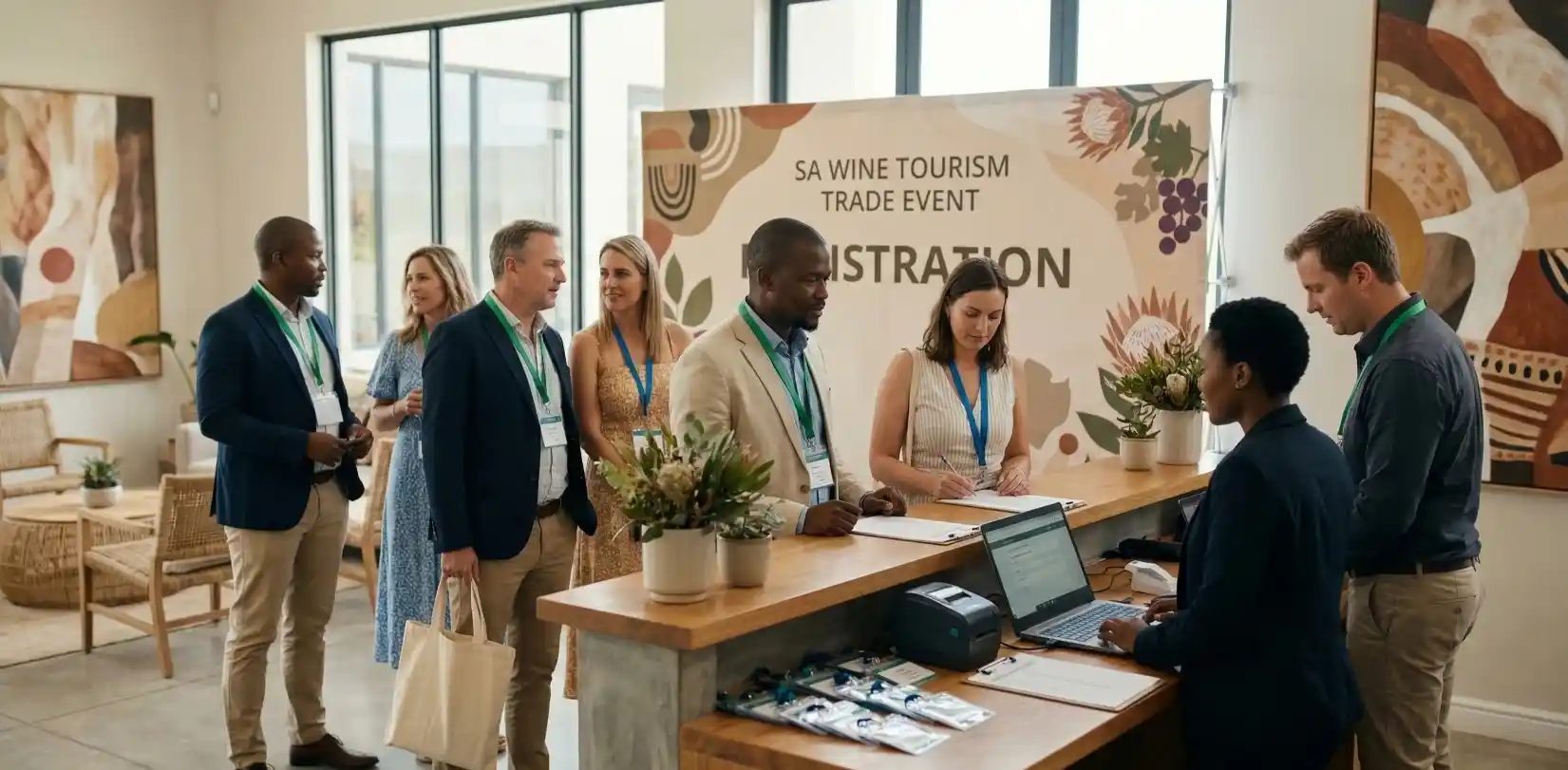
Conference-style gatherings often combine industry briefings, workshops, and networking sessions designed to strengthen tourism partnerships. A good example is South Africa’s wine tourism conference, where operators, wineries, and destination marketers meet to discuss collaboration and strategy
In the trade and partnership world, “event” is less about a big public crowd and more about structured access to people, places, and decisions. In practice, that can include:
A wine tourism conference format focused on investment, destination strategy, and operator partnerships, with programmed networking and sessions.
Route-led showcases with trade blocks (hosted tastings for operators, itinerary planners, and hospitality partners).
Charity and auction-style trade gatherings that attract senior decision-makers and high-value partnership conversations.
Regional tourism trade meet-ups where wine is a pillar product alongside accommodation, activities, and transport.
Hosted buyer programmes where meetings are scheduled and follow-up is operationalised (guest experience, logistics, terms).
Who uses these events and why?
Wine tourism events are used by:
Wineries and route bodies looking to build packaging partnerships and increase visitation through trade channels.
Tour operators and DMC-style partners building itineraries, group programmes, and seasonal campaigns.
Hospitality groups and accommodation partners shaping “stay and experience” bundles.
Distributors and category teams doing regional discovery and relationship building that supports premium positioning.
Destination marketers aligning campaigns with signature seasons and travel patterns in key regions like the Western Cape.
What makes an event “trade-useful”?
A trade-useful event usually has an attendee mix that matches the goal, meaning the right combination of operators, route leaders, accommodation partners, experience providers, and decision-makers who can commit to workable terms. When the people in the room can actually approve rates, capacity, and timelines, conversations move from “interesting idea” to “next steps” quickly.
Matchmaking or structured networking is another strong signal of trade value. Pre-booked, one-to-one meetings consistently outperform casual “hope to meet the right person” networking because time is used efficiently and discussions are aligned to real needs rather than chance encounters.
Programme format matters because it creates proof. Site visits, workshops, case sessions, and practical briefing packs reduce uncertainty by showing how experiences run in real life, not only how they are described. This is where partners can test fit around guest flow, staffing, timing, and the details that affect delivery.
Exhibitor relevance keeps the event grounded. A trade-useful event attracts partners that can deliver consistently, with clear offers, capacity, and operational readiness, rather than only strong marketing and vague promises.
Seasonality fit is often the deciding factor in South Africa. Timing needs to align with travel demand and operational capacity across the route or region, whether that is harvest periods, peak domestic travel, or shoulder-season opportunities that suit trade itineraries.
Travel logistics reality should be treated as a non-negotiable filter. Drive times, venue access, accommodation capacity, and transport options must work for groups and trade schedules, otherwise a good conversation becomes an impractical plan once costs and timing are mapped.
Compliance considerations, where relevant, can make or break corporate and procurement-led travel. Minimum standards on safety, insurance, and documented policies often matter more than marketing language, especially when group bookings, duty of care, and contractual accountability are involved.
Wine tourism event shortlisting checklist
| Criterion | What a buyer or partner should ask/verify |
|---|
| Goal clarity | Is the objective sourcing, itinerary building, partnership signing, or destination planning? |
| Attendee fit | Who will be in the room: route leaders, operators, accommodation, experience providers, buyers? |
| Meeting structure | Are meetings bookable in advance, and is there a follow-up mechanism after the event? |
| Proof of delivery | Are there site visits, case sessions, or operational briefings that show how experiences run? |
| Regional access | Are venues reachable with realistic drive times and transport options for trade schedules? |
| Capacity and SLAs | Can partners commit to group sizes, turnaround times, and service levels in writing? |
| Terms and risk | Are rates, payment terms, cancellation, and weather contingencies documented and fair? |
Helpful internal reading for compliance-led procurement: the labelling and buyer-proof mindset translates well to trade packs and partner documentation, especially for supplier-style readiness.
Wine routes Western Cape
In the Western Cape, the practical difference between a “nice weekend” and a trade-ready programme is usually logistics. Drive time between towns, accommodation capacity in peak periods, and venue access for groups shape whether an itinerary holds together. Regional planning often begins with understanding the province’s broader destination strategy and visitor flows. Resources outlining Western Cape wine tourism initiatives help partners align travel planning with seasonal campaigns and regional promotion.
Partnership realities are where most plans wobble. Lead times are needed to build packages, confirm rates, align service-level expectations, and lock in operational details. Payment terms and cancellation terms should be agreed early, especially for groups and trade partners who carry reputational risk. On-the-ground logistics should be explicit: who confirms bookings, who handles guest comms, what happens with weather changes, and how handovers work between transport, accommodation, and winery teams.
Benefits Section (reframe as outcomes)
For buyers and partners, a trade-first approach creates outcomes that are simple and measurable in practice: faster comparison across options, fewer “just checking” email chains, clearer expectations before money is spent, and collaborations that fit the real operating model on both sides.
For suppliers, wineries, and experience providers, inclusion in the annual publications improves discoverability with trade buyers and tourism partners who prefer reference packs when planning. This is not a promise of outcomes or deal volume. It is a practical way to be easier to shortlist when someone is building a route plan, partner list, or meeting schedule.
A useful internal starting point for regional discovery is Food & Beverage Trade South Africa’s wine-region guide content, which helps map areas before selecting event travel and meeting routes.
Download one of our latest eBooks
A buyer-ready reference pack for planning support and directory-style context across supply chain and tourism-linked trade.
Register your business to be featured in upcoming publications.
Platform Overview
Food and Beverage Trade South Africa is a publisher and trade resource hub connecting buyers and suppliers through annual publications (downloadable PDFs). These publications are built to support discovery, planning, and faster shortlisting across the value chain.
Registration supports inclusion in future editions of these publications (not website listings).
FAQ
How to choose events worth attending?
Shortlist events that match the objective, have the right attendee mix, and offer structured meetings or facilitated networking. Events that provide organised matchmaking or pre-booked meetings usually create more value than informal networking alone.
What is a typical lead time for partnerships?
Allow several weeks to align availability, rates, inclusions, and operational responsibilities. This lead time is particularly important when building group itineraries or multi-partner packages, as each partner needs time to confirm capacity, service levels, and booking processes. In business terms, lead time refers to the period between initiating a process and completing it, which allows organisations to plan and coordinate activities effectively.
What documents or information do partners expect?
A one-page partner brief usually helps: rates and inclusions, capacity, service levels, payment terms, cancellation terms, and a simple booking and handover process.
What regional travel and logistics issues matter most?
Drive times, transport options, accommodation capacity in peak periods, and venue access for groups are the first constraints to verify.
How to compare event opportunities quickly?
Use a consistent scoring sheet: goal fit, attendee relevance, meeting structure, proof of delivery, logistics reality, and risk and terms.
How should follow-up be handled after an event?
Send a summary within 48 hours, confirm the next action, assign a single owner for each relationship, and move to a written scope and terms early.
How to formalise partnerships without friction?
Use a short written agreement that covers scope, rates, inclusions, responsibilities, payment terms, cancellations, and contingencies, then attach the itinerary or service brief.
What makes a wine tourism conference useful for trade?
The best value is structured access to decision-makers, practical sessions, and scheduled networking that supports real partnership planning.Regional planning often begins with understanding the province’s broader destination strategy and visitor flows. Resources outlining Western Cape wine tourism initiatives help partners align travel planning with seasonal campaigns and regional promotion.