
Register to receive a free download link via your email address
We respect your privacy, do not tolerate spam and will never sell or give away your personal information to any third party.
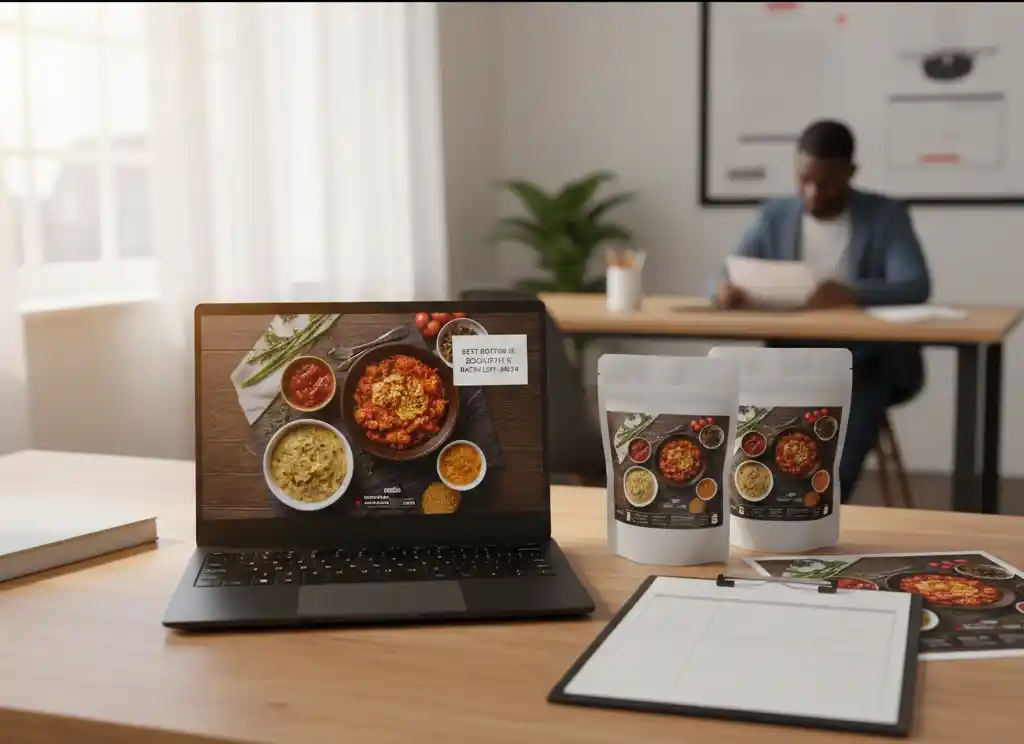
A buyer requests final artwork for sign-off, the listing clock starts, and then a simple label gap triggers a long email chain: reworked panels, reprinted sleeves, and delayed DC onboarding. In practice, labelling requirements South Africa food becomes a commercial risk control as much as a compliance topic, because label mistakes are one of the fastest ways to stall a retail or foodservice listing.
This hub breaks the process into buyer-friendly checks: the label elements that typically matter most, how allergen labelling South Africa fits into real-world retail expectations, the common red flags that lead to delays, and a practical shortlisting checklist to compare suppliers faster. For buyer discovery and supplier evaluation workflows, see Food Trade Directory South Africa and the Food & Bev Trade blog for supporting trade content.
For procurement, “compliant” usually means the label is complete, consistent, and defensible against current official guidance. That includes mandatory label elements, truthful presentation, and claims that can be backed up with documentation. Because requirements can change, treat labelling requirements South Africa food as “verify against the latest official guidance” rather than a once-off tick-box.
Current labelling requirements should always be verified against the latest official guidance issued by the National Department of Health. Buyers and suppliers can reference the Food Control resources and published regulations available via the Department’s website to confirm mandatory elements and recent updates.
Buyers carry the downstream risk: consumer safety, complaint escalation, withdrawals, traceability failures, and reputational fallout. A weak label can also fail internal retailer QA gates, delay listings, and increase total onboarding cost through reprints and rework. In short: label readiness is a proxy for operational discipline.
Allergens are one of the quickest escalation points because consequences are immediate and personal for consumers. Buyer teams typically expect a clear allergen statement, a supplier declaration that matches the label, and a basic explanation of allergen controls (segregation, cleaning validation, changeovers, and supplier risk management). Strong allergen labelling South Africa practices also support smoother export-adjacent conversations where international buyers expect alignment to globally recognised labelling principles.
| Criterion | What a buyer should ask or verify |
|---|---|
| Ingredient list accuracy | Does the ingredient list match the current formulation and spec sheet, including sub-ingredients? |
| Allergen declaration | Is the allergen statement clear, consistent, and supported by allergen controls and supplier declarations? |
| Batch coding and traceability | Is batch/lot coding present, legible, and linked to production records for recall readiness? |
| Date marking and storage | Are date marking and storage instructions consistent with shelf-life evidence and cold chain realities? |
| Nutrition panels | Where used/required, is the nutrition panel based on reliable calculation/testing and correctly formatted? |
| Claims substantiation | Can every claim be backed by specs, test results, supplier statements, or recognised guidance? |
| Artwork and data consistency | Do label, carton, spec sheet, and product data capture fields match exactly (SKU names, weights, allergens, claims)? |
Retail listing processes often stress-test labels at speed: artwork sign-off, product data capture, QA gatekeeping, and sometimes a secondary review when promotions or claims are involved. The practical goal is to reduce rework by treating labelling requirements South Africa food as part of a repeatable “pre-flight” workflow, not a final design task.
Official labelling regulations are published through the Government Gazette, and procurement teams should ensure suppliers confirm alignment with the most recent version of these regulations before final artwork approval.
Retail and foodservice buyers commonly ask for a small evidence pack that supports what is printed on-pack. Typical requests include spec sheets per SKU, recent COAs where relevant, allergen controls and supplier declarations, traceability notes (batch coding logic), and written confirmation of any higher-risk claims. This is not legal advice, it is risk management to support listing readiness.
Cleaner label packs reduce listing delays, cut back-and-forth with suppliers, and make it easier to compare products fairly across a category. A consistent food label compliance checklist South Africa also improves internal audit trails when a decision is questioned later.
Better label readiness supports smoother onboarding, fewer reprints, and clearer product positioning during buyer evaluations. Discoverability can improve through inclusion in annual publications where trade buyers research categories and shortlist suppliers, especially when documentation quality makes the product easy to approve.
Download one of our latest eBooks via the on-page form module to get a buyer-ready reference asset and practical trade guidance that supports faster shortlisting and listing readiness.
Register your business to be featured in upcoming publications.
Food and Beverage Trade South Africa is a trade publisher and industry connector operating through annual downloadable PDF publications that support buyer discovery and supplier evaluation:
Business registration supports potential inclusion in future publication editions. It is not a website listing service.

We respect your privacy, do not tolerate spam and will never sell or give away your personal information to any third party.
We respect your privacy and do not tolerate spam and will never sell, rent, lease or give away your information (name, address, email, etc.) to any third party.

Register to receive a free download link via your email address.
We respect your privacy, do not tolerate spam and will never sell or give away your personal information to any third party.
Register to receive a free download link via your email address.
We respect your privacy, do not tolerate spam and will never sell or give away your personal information to any third party.
We respect your privacy, do not tolerate spam and will never sell or give away your personal information to any third party.
We respect your privacy and do not tolerate spam and will never sell, rent, lease or give away your information (name, address, email, etc.) to any third party.
Feature now in the online edition and also in the next print edition. After registration you will receive an email with detailed participation options.
We respect your privacy and do not tolerate spam and will never sell, rent, lease or give away your information (name, address, email, etc.) to any third party.
We respect your privacy and do not tolerate spam and will never sell, rent, lease or give away your information (name, address, email, etc.) to any third party.
We respect your privacy, do not tolerate spam and will never sell or give away your personal information to any third party.
We respect your privacy, do not tolerate spam and will never sell or give away your personal information to any third party.
We respect your privacy, do not tolerate spam and will never sell or give away your personal information to any third party.
We respect your privacy and do not tolerate spam and will never sell, rent, lease or give away your information (name, address, email, etc.) to any third party.


