Trade
TL;DR – Key Takeaways
Trade is the exchange of goods and services; international trade is the same exchange across borders, which adds customs, currency, and compliance steps.
Start with a clean brief: product specs, quality standard, volume plan, and acceptable substitutions (especially for ingredients and packaging inputs).
Align commercial terms early: pricing basis, delivery point, lead time, and who carries which costs/risks using clear international commercial terms (Incoterms rules).
Treat documentation as part of the product: invoices, transport docs, certificates, permits, and origin proof must match the deal and the shipment.
Introduction
A category manager needs a steady supply of a key input: perhaps bulk spices sourced locally, or a packaging component that is cheaper offshore but comes with longer lead times. The decision looks simple until the fine print appears, payment terms, shipment windows, and the compliance documents that must clear the goods on time. That is where trade and international trade stop being theory and become day-to-day procurement execution.
For deeper, practical market context across fresh food, processed goods, logistics, and trade operations, our blog archive is a useful starting point.
This hub explains the meaning of trade, the main types, the benefits and trade-offs, and the real-world flow from sourcing to delivery. The focus stays practical for South African food and beverage buyers and suppliers: what to check, what to ask, and what proof matters when deals cross borders.
Trade Meaning + How It Works
What is trade?
Trade is the exchange of goods or services between parties, where value is transferred through a sale, contract, or other agreed arrangement. In practice, “trade” for procurement teams means turning demand into supply through clear specifications, predictable lead times, and enforceable terms.
What is international trade?
International trade is trade that crosses national borders, typically structured as imports (goods or services brought into a country) and exports (sent out to another country). Cross-border trade adds customs clearance, foreign exchange exposure, transport complexity, and additional documentation and regulatory checks.
For South Africa, customs clearance generally involves a goods declaration supported by documents such as invoices, bills of lading, certificates of origin, and permits where required.
How trade works in practice: the buyer flow
1) Source and shortlist
Start with the business need (specification, volume, shelf-life, allergen profile, packaging format, palletisation, and delivery cadence). Shortlist suppliers based on capability, evidence, and past performance, not only price. For perishables, cold-chain competence and temperature control evidence matter as much as capacity.
2) Agree commercial terms
Confirm the pricing basis (per unit, per pallet, or landed estimate), currency, and validity period. Align on delivery terms using international commercial terms (Incoterms rules), so responsibilities for freight, insurance, export/import formalities, and risk transfer are explicit. Incoterms rules are widely used in B2B contracts to define tasks, costs, and risk between seller and buyer.
3) Lock the paperwork and compliance requirements
Treat documentation as a deliverable. For many products, documents will include the commercial invoice, packing list, transport document (bill of lading / air waybill), and origin documentation. Depending on the product class, permits, inspections, and certificates may be required. SARS notes that clearance checks the declaration against supporting documents such as invoice, bill of lading, certificate of origin, and permits.
4) Plan logistics and clearance
Choose the route and mode (road, sea, air) based on lead time, temperature sensitivity, and cost. Confirm who appoints the clearing agent and who pays duties and VAT (linked to the agreed trade terms). Build buffers for peak congestion and document queries. Food and beverage delays often come from mismatches between paperwork and the physical shipment.
5) Receive, inspect, and pay
Receipt is not only “arrived at the gate.” Confirm delivery against spec, batch/lot traceability, temperature records where relevant, and packaging integrity. Payment should follow the agreed milestones (for example, deposit + balance after shipment documents, or payment on delivery for domestic supply). For exporters, the dtic’s export cycle summarises the practical flow as setting up the deal, shipping the goods, getting paid, and follow-up/service.
Where deals go wrong
Most trade problems are avoidable. Common breakdown points include: a sample was approved but the production spec was never finalised; delivery and payment terms were assumed rather than written; permits or certificates were only discovered after production; lead times were planned around best-case windows; or shipment documents did not match each other (names, weights, descriptions, codes), which triggers customs queries and storage costs.
Trade essentials checklist
| Step / Area | What a buyer should confirm or ask for |
|---|---|
| Specification | Final spec sheet, tolerances, allergens, shelf-life, packaging format, pallet pattern |
| Supplier capability | Production capacity, food safety system evidence, traceability approach, key contacts |
| Pricing | Currency, validity period, escalation rules, what is included/excluded (freight, insurance, duties) |
| Delivery terms | Named delivery point, Incoterms rule, responsibility for export/import formalities |
| Lead time | Production time, cut-off dates, transit time, buffers, peak-season constraints |
| Documentation | Invoice, packing list, transport doc, origin proof, permits/certificates as required |
| Quality controls | COA or test results, sampling method, non-conformance process, returns/credits |
| Cold chain (if relevant) | Temperature set-points, monitoring records, reefer settings, handover checks |
| Payment | Milestones, required documents, dispute process, late-delivery remedies |
| Ongoing performance | OTIF targets, complaint trends, corrective actions, review cadence |
Need buyer-ready reference templates in one place?
The guide download module is hosted here: Dry Goods Supplier South Africa
Types of Trade
Domestic vs international
Domestic trade happens within South Africa: a processor buys ingredients from a local miller, or a retailer buys from a regional distributor. International trade happens when inputs or finished goods cross borders, importing a specialised additive, exporting bottled product, or shipping packaging from a foreign converter.
Goods vs services
Goods trade covers physical products such as produce, ingredients, packaging, and equipment spares. Services trade includes freight forwarding, customs clearing, quality testing, cold-chain storage, and consulting. The World Trade Organization describes trade in services through different “modes of supply” depending on where supplier and consumer are located.
Bilateral, regional, and multilateral
Bilateral trade refers to trade between two countries. Regional trade is shaped by regional agreements and common frameworks. Multilateral trade is trade governed by broadly adopted global rules and norms.
For procurement teams, the practical takeaway is simple: the more borders involved, the more important consistent documentation, accurate product classification, and clear terms become.
Direct vs indirect trade routes
Direct trade is when a buyer contracts directly with a producer or manufacturer. Indirect trade is when a buyer works through an agent, distributor, or trading house; this can reduce execution effort but can also reduce visibility on origin, pricing build-up, and quality controls. Re-exports (imported into an intermediary market and exported onward) can add another layer of origin and document complexity.
Benefits + Trade-offs
Trade is not “good” or “bad” on its own. It is a tool. The value depends on execution quality and risk discipline.
Benefits for buyers
Trade expands sourcing options beyond a single region, which helps continuity planning and gives stronger pricing signals. It can also unlock category innovation: new ingredients, packaging formats, or processing inputs that are not locally available at scale. For South African category and supply chain teams, international routes can become part of a resilience plan, provided lead times and compliance are managed.
Benefits for suppliers
For producers and manufacturers, trade can open access to new markets and larger order volumes. However, cross-border buyers usually expect stronger proof: clearer specifications, repeatable quality evidence, and predictable lead times. The documentation burden increases, but so does the opportunity to build a buyer-ready operating rhythm.
Trade-offs to plan for
International trade adds foreign exchange exposure, longer and less predictable lead times (especially around ports and peak seasons), higher compliance complexity, quality and substitution risk, and a heavier documentation workload. The cost of errors can be significant (storage, demurrage, rejected clearance), so prevention is cheaper than recovery.
Call-to-Action
Download a free Food & Beverage Trade guides
Use the guide as a buyer-ready reference for supplier discovery, category context, and practical trade documentation reminders.
Register a business to be featured in upcoming publications.
Platform Overview
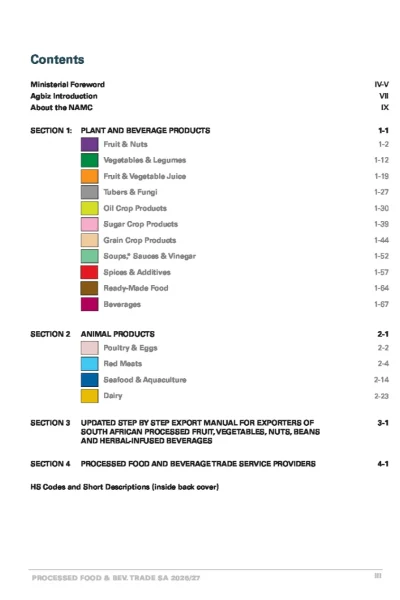
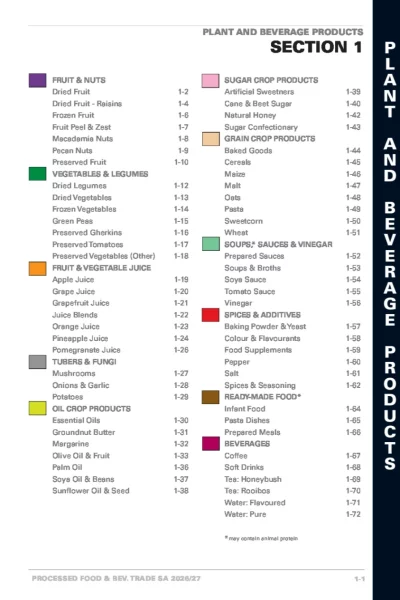
Food and Beverage Trade South Africa operates as a trade publisher and connector through annual downloadable PDF publications designed for buyer discovery and supplier visibility.
Fresh Food Trade SA: South Africa’s fresh food trade and supply chain directory
Processed Food & Beverage Trade SA: The processed trade supply chain directory
Wines & Wineries of SA: The visitors’ guide to South African wines & Wineries.
Business registration supports consideration for future publication inclusion, not website listings.
FAQ
What is the difference between trade and international trade?
Trade is the exchange of goods or services between parties. International trade is the same exchange across borders, which adds customs clearance, currency exposure, and cross-border documentation.
What are imports and exports?
Imports are goods or services brought into a country. Exports are goods or services sent from one country to another. In practice, imports and exports require aligned contracts, supporting documents, and compliant labelling and classification.
What documents are commonly needed to import or export goods?
Commonly required documents include a commercial invoice, packing list, transport document (bill of lading or air waybill), and origin documentation. Depending on the product, permits, inspection results, and certificates may also be needed. SARS lists supporting documents such as invoice, bill of lading, certificate of origin, and permits as part of the clearance process. South African Revenue Service
How do lead times and MOQs affect cross-border trade?
Cross-border supply often has longer lead times and higher minimum order quantities because production is batched and shipping is consolidated. Mitigation usually means earlier forecasting, staged deliveries, and clearer cut-off dates in the contract.
How do buyers reduce quality and supplier risk?
Use a supplier vetting checklist, align specifications with tolerances, require repeatable quality evidence (COA, traceability), and confirm an agreed non-conformance process. For temperature-sensitive goods, require cold-chain monitoring records and handover checks.
What are Incoterms rules and why do they matter?
Incoterms rules are standard international commercial terms used in B2B contracts that clarify who is responsible for tasks, costs, and risks at each step of the shipment. ICC – International Chamber of Commerce
How does payment usually work in trade deals?
Payment terms vary by risk profile and relationship maturity. Common patterns include partial upfront payment with balance on shipment documents, payment on delivery for domestic trade, or documentary arrangements (for example, letters of credit) for higher-risk cross-border trade. Professional finance advice is recommended for selecting payment instruments.
How can suppliers be compared fairly during sourcing?
Use a standard RFQ and scoring grid: specification fit, compliance evidence, lead time reliability, total landed cost assumptions, and service levels. Avoid comparing “like with unlike” by forcing all quotes onto the same delivery term and scope.